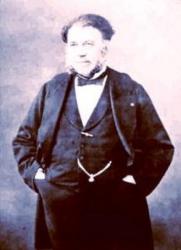
Friedrich Haytmann
 Germany
- Friedrich Heitmann
- Early Career and Notable Works
- Architectural Style and Influences
- Wartime Service and Later Years
- Legacy and Postwar Eclipse
Friedrich Heitmann
Friedrich Heitmann was a renowned German architect who left an indelible mark on East Prussia. He is widely celebrated for his contributions to the architectural landscape of Königsberg, including the Amalienau Colony, the churches of Königsberg, and numerous villas and houses throughout the city.
Early Career and Notable Works
Heitmann arrived in Königsberg in 1886 as a young construction manager for the General Post Office. He gained recognition by winning first prize in the competition for the Albertina Palestra, though he did not secure the contract for its execution. His first major commission came in 1899-1901 with the design of the Queen Louise Memorial Church.
Beyond notable projects in Gerdauen and Braunsberg, as well as hospitals in Gerdauen and Mohrungen, Heitmann's primary legacy lies in Königsberg's Amalienau development. He collaborated with his friend, building councilor Kretchmann, in designing this vibrant neighborhood and played a key role in its financial realization as a co-founder of the Königsberg Real Estate and Building Society. Heitmann designed numerous preserved villas and multi-family homes in Amalienau.
Architectural Style and Influences
Heitmann's architectural style drew heavily from the "Historism" movement, incorporating its romanticism and asymmetry. He also integrated elements of Art Nouveau but avoided its typical decorative embellishments. This approach, once widely praised, faced criticism even before the end of World War I and fell out of favor after the war.
Wartime Service and Later Years
At the outbreak of World War I, Heitmann served as a senior sergeant in the army, fighting in East Prussia and Poland. He fell severely ill and was forced to return to Königsberg, his health declining. He abandoned his architectural practice, selling his recently constructed villa in Amalienau in 1918. He found refuge in a parsonage he had designed near the St. Adalbert Chapel.
Legacy and Postwar Eclipse
Heitmann passed away in 1921. The end of World War I marked not only a political upheaval but also a paradigm shift in architectural philosophy. Heitmann's pre-war style found little favor in the post-war era. The profession had embraced "modernism," rejecting the sentimentality of the past. Consequently, Heitmann's contributions were largely overlooked and forgotten.