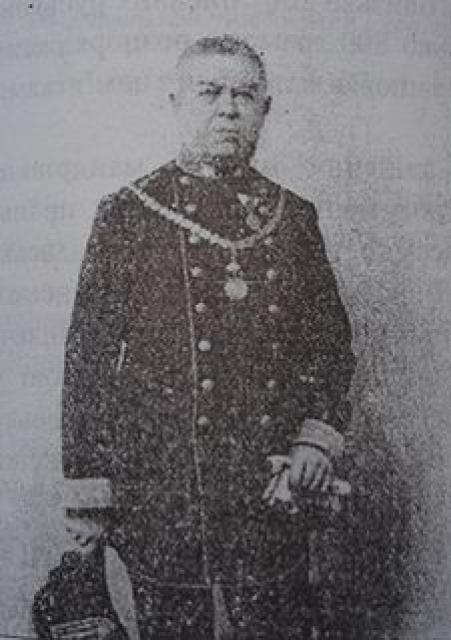
Friedrich Kleinwachter
 Australia
Eugen von Böhm-Bawerk
Early Life and EducationEugen von Böhm-Bawerk was born in Brünn, Austria, on February 12, 1851. His father, Ludwig von Böhm-Bawerk, was a high-ranking civil servant in the Austrian government. Eugen studied law and economics at the University of Vienna, where he received his doctorate in 1875.
Academic Career
After graduating, Böhm-Bawerk worked as a civil servant in the Ministry of Finance before being appointed as a professor of political economy and statistics at the Polytechnic Institute in Riga, Latvia, in 1880. In 1889, he moved to the University of Czernowitz, Austria (now Chernivtsi, Ukraine), where he taught until his retirement in 1904.
Economic Contributions
Böhm-Bawerk is best known for his work in the field of capital theory. He developed the theory of interest based on the idea of time preference, which states that individuals prefer immediate gratification over future rewards. He also advanced the concept of "waiting" as a factor in the production of capital, arguing that the time spent accumulating capital represented a cost that had to be compensated through interest payments.
Political Involvement
In addition to his academic work, Böhm-Bawerk was also an active participant in Austrian politics. He served as Minister of Finance from 1895 to 1897 and again from 1900 to 1904. During his time in office, he implemented a number of reforms to the Austrian financial system, including the introduction of a gold standard.
Legacy
Böhm-Bawerk's work in economics had a significant impact on the development of the Austrian School of Economics. His theories of interest, capital, and value continue to be studied and debated by economists today. He is considered one of the most important economists of the late 19th and early 20th centuries.


