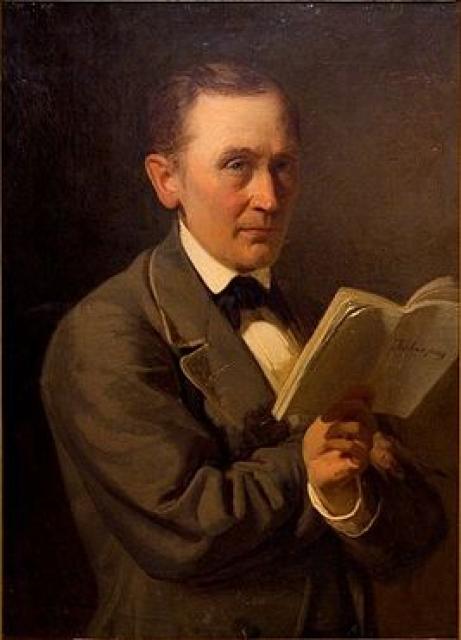
Friedrich Reinhold Kreutzwald
 Estonia
- Friedrich Reinhold Kreutzwald: A Renaissance Man of Estonia
- Early Life and Education
- Medical Career and Public Service
- Literary and Folklore Contributions
- The Birth of Estonian Literature
- Legacy and Recognition
Friedrich Reinhold Kreutzwald: A Renaissance Man of Estonia
Born into poverty as the son of a serf in 1803, Friedrich Reinhold Kreutzwald's life was a testament to the power of education and self-determination. Despite the hardships he endured, Kreutzwald became a pioneer in Estonian literature, folklore, and medicine.
Early Life and Education
Kreutzwald's childhood was marked by the harsh realities of serfdom. However, he managed to attend school in Wesenberg for a short time before being forced to drop out due to financial constraints. Nevertheless, he continued his studies in Reval (now Tallinn) and later taught in elementary schools while pursuing his education.
Medical Career and Public Service
In 1826, Kreutzwald's dream of becoming a doctor was dashed when he was denied admission to the St. Petersburg Medical-Surgical Academy due to his low social status. Instead, he attended medical school at the University of Dorpat (now Tartu University), where he developed a close friendship with Friedrich Robert Faehlmann, a philologist who greatly influenced his future work.
After graduating, Kreutzwald became the town doctor in Verro (now Võru) for 44 years. He used his position to connect with the local people and advocate for their rights, often writing articles in German on social and folkloric issues. However, his outspoken support for the peasantry drew the ire of influential German circles in Võru, leading to a boycott of his medical practice.
Literary and Folklore Contributions
Despite his financial struggles, Kreutzwald found solace in his literary and folklore pursuits. He began publishing his works in Estonian in 1840, including articles on Estonian antiquities, mythology, and folk tales. Through meticulous research, he collected, edited, and published ancient Estonian fairy tales and contributed to the creation of Estonian folk calendars.
The Birth of Estonian Literature
Kreutzwald's most significant achievement was the compilation of Estonian folk tales into a single masterpiece, the epic poem "Kalevipoeg" ("The Son of Kalev"). Building upon Faehlmann's earlier work, Kreutzwald's "Kalevipoeg" became the foundation of Estonian national literature, folklore, and self-identity. The first edition of the epic was published in German from 1857 to 1861, while a popular edition in Estonian was printed in Finland in 1862.
Legacy and Recognition
Kreutzwald's contributions to Estonian culture cannot be overstated. He was a pioneer in every field he touched, from medicine to folklore to literature. His work laid the groundwork for the Estonian national awakening and continues to inspire generations of Estonians today.
In recognition of his achievements, Kreutzwald was awarded an honorary doctorate from the University of Helsinki in 1862 and the Order of the Polar Star from the Swedish king in 1879. His name is commemorated in numerous institutions, streets, and monuments throughout Estonia. Friedrich Reinhold Kreutzwald, the Renaissance man of Estonia, left behind a legacy that will forever shape the Estonian nation.


