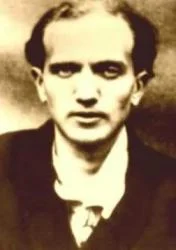
Gabriel Gilbert
- A Parisian Writer With Uncertain Dates
- Tragedy, Myth, and Romance
- Queen Christina’s Secretary
- A Minor Figure in a Brilliant Age
Gabriel Gilbert wrote for the Paris stage in the crowded golden age of French drama, when Corneille and Racine were reshaping tragedy. His own plays ranged from royal history and classical myth to pastoral romance and comedy. Though his name later faded from the standard repertory, Gilbert was prolific in his day and held an unusual court position as secretary and French representative for Queen Christina of Sweden.
A Parisian Writer With Uncertain Dates
The surviving record of Gilbert’s life is thin, and even his dates are not settled. Older biographical sources place his birth in Paris around 1610; some modern references give a date closer to 1620. His death is generally placed between about 1675 and 1680. He was a Protestant in a predominantly Catholic France, a fact that formed part of his social and professional context, though the available biographies offer few details of his private life.
Gilbert began his career in the service of the Duchess of Rohan, working as her secretary. At the same time, he developed a literary career that brought him into the world of Parisian theater. His early plays include Marguerite de France, a tragicomedy published around 1640, and Téléphonte, which followed in 1642. He wrote across dramatic forms rather than building his reputation on a single kind of play.
Tragedy, Myth, and Romance
Among Gilbert’s best-known works were Rodogune and Hypolite ou le Garçon insensible. The latter reworked the story of Hippolytus and Phaedra, but altered the familiar myth into a more romantic drama centered on love and thwarted marriage. Rather than simply repeating the violence and moral rigidity of classical tragedy, Gilbert’s version gave its characters more room for tenderness and courtly feeling. Later scholars have described this gentler treatment of tragic material as one of the distinctive features of his work.
He also wrote comedies and pastoral pieces. Les Intrigues amoureuses appeared in 1663, the same year as his pastoral Les Amours de Diane. A later pastoral, Les Peines et les Plaisirs de l’amour, followed in 1672. The range of these titles reflects the shifting tastes of the French stage, where mythological plots and elevated tragedy shared space with lighter tales of love and intrigue.
Queen Christina’s Secretary
Gilbert’s literary skill opened another door. Around 1656 or 1657, after Christina of Sweden abdicated and settled in France, she appointed him secretary of her commands and resident at the French court. The position made him a representative for the former queen in France and gave him a place within the networks of diplomacy and patronage that surrounded her.
The appointment also helps explain why Gilbert’s writing career continued across several decades. He was not only a playwright seeking theater audiences; he was a working man of letters connected to a powerful royal patron. His output included poems and prose as well as plays, though many works have since become difficult to find outside specialist collections.
A Minor Figure in a Brilliant Age
Gilbert lived in the shadow of celebrated contemporaries, and his plays largely disappeared from the repertory after his lifetime. Yet his career shows how broad and competitive French literary culture was in the seventeenth century. He wrote for a public enthralled by theater, adapted ancient stories to changing tastes, and moved between the stage and court service. Remembered now as a lesser-known playwright of the age of Corneille and Racine, Gilbert remains notable for the diversity of his work and for his place in Queen Christina’s French circle.