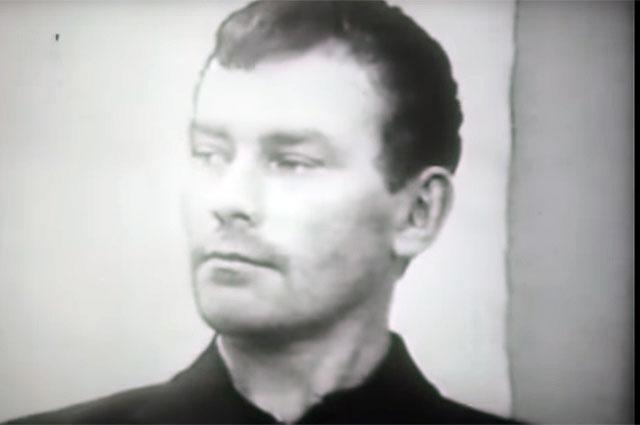
Gennady Mihasevich
 Belarus
- Biography of Gennady Mikhasevich
- "So, you are the 'Patriot of Vitebsk'?" asked Ignatovich.
- Source: The Most Dangerous Maniacs
Biography of Gennady Mikhasevich
Gennady Mikhasevich (1947-1987) was a man who appeared to be a perfect family man, father, and specialist, but was actually a sexual deviant, sadist, and maniac. The line between mental health and illness is very fragile, and many individuals who are considered "normal" have serious deviations in their psyche and behavior. Mikhasevich belongs to the category of killers who hide their dark side behind a façade of normalcy.
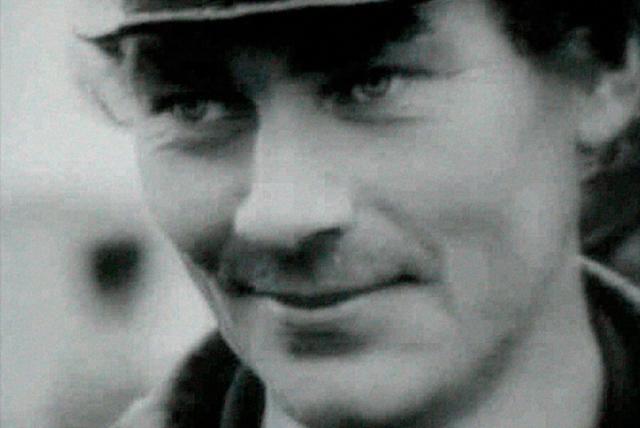
From a young age, Mikhasevich suffered from a complex of sexual inadequacy, which could have been resolved if he had sought help from a sexologist. However, in a small provincial town like Soloniki, where Mikhasevich lived in Belarus, such specialists were scarce. He led a seemingly respectable life, with a good job as the head of repair workshops, a family consisting of a wife and two children. No one, not even his closest relatives, could have suspected that Mikhasevich would occasionally transform into a monster, committing murders to satisfy his twisted sexual desires.
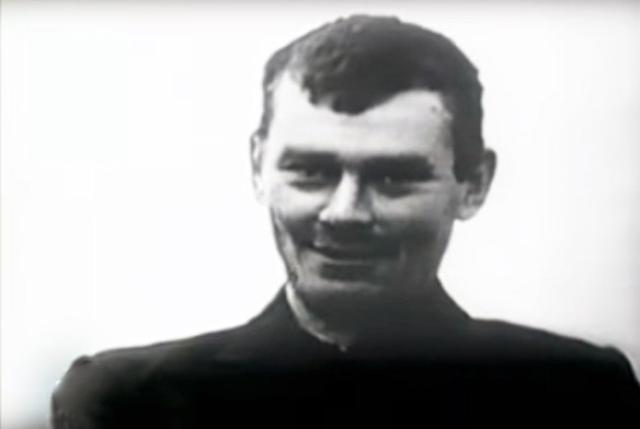
The story of Mikhasevich's life and crimes is like a whirlwind that devastated the lives of many. Only women fell victim to his crimes, and the number is horrifying - thirty-six! He committed his first murder in 1971, and with each passing year, the number of victims increased. The peak of his killing spree was reached in 1984, with a record-breaking twelve murders. For fourteen years, young women were killed by Mikhasevich, and each year the number of victims grew. During this time, fourteen people were convicted of the murders he committed before the real criminal was uncovered. One of the wrongfully convicted individuals was executed, another attempted suicide, a third spent ten years in prison, and the fourth, after six years of imprisonment, went blind and was released as "no longer a threat." All of these individuals confessed to the crimes they did not commit due to torture and psychological pressure from the police and investigative authorities. This is just one example of such a "miscarriage of justice."
In the evening of January 13, 1984, a student named Tatiana K. left her dormitory heading towards the Luchesa station, which was two kilometers away from Vitebsk. She did not return the next day or even a week later. Her body was found on February 2 under a railway embankment. An investigation was initiated upon the discovery of her body, and a young driver named Oleg Adamov, who had been working near the railway on January 13, was suspected of the crime. He was soon arrested, allegedly for hooliganism, and after several days of continuous interrogation, he confessed and showed the location where he killed her. However, he could not explain what happened to her bag, which according to her friends, contained her study materials and textbooks. The bag was never found. Adamov was sentenced to fifteen years in prison in early 1985, during which he attempted to take his own life.
The first and second murders went unpunished, and Mikhasevich developed a craving for "adventures," as psychiatrists say, for "consolidating his actions." The murders became his necessary dose of excitement, without which he could not live. Over the years of impunity, the maniac's modus operandi developed and refined. Mikhasevich committed his murders near roads, and all of his victims were strangled in the same way - with a tightly pulled scarf, headscarf, or bundle of grass. The location of the murders was also specific - in the area between Vitebsk and Polotsk. That's why this case became known as the "Vitebsk case" in criminalistics.
Why did the criminal manage to evade responsibility for so many years, continuing to create human tragedies? Impunity, which gave the killer free rein, was the result of investigative error. The prosecution presumed that different people were committing the murders. This version was developed as the only one by an unquestionable authority, and even the police did not try to consider the investigative materials from a different perspective - the possibility that one person was responsible.
Another viewpoint was perceived as dangerous dissent in the Belarusian Prosecutor's Office. When investigator N.I. Ignatovich dared to doubt the guilt of the accused and the correctness of the actions of the renowned "expert," he was immediately removed from the investigative group. Ignatovich's behavior was deemed "unserious," and he was characterized as a "boy" who imposed discussion on a question that had long been resolved.
However, Ignatovich did not give up. He insisted on being given all the investigative materials related to these murders - both unsolved and those that went through the court. He read them slowly, rereading them, and entered the circumstances of the women's deaths into special investigative cards. By that time, there were already more than thirty of these cards. Upon completing them, Ignatovich noticed the characteristic features that were common to each crime and concluded that there was only one criminal signature, one killer at work.
Based on this conclusion, Ignatovich began his search. He mapped out the route of each victim, and all the planned routes converged from Lepel and Vitebsk towards Polotsk. Perhaps the perpetrator lived there? He was most likely a native of the Vitebsk region, familiar with these places. A presumed portrait of the killer was also created:
Age? Between 32 and 42 years old.
Education? Most likely a secondary specialized education.
Height? 175-185 centimeters.
Curly, blond hair. Trusting appearance. His means of transportation? The few witnesses who saw the women near the road before their deaths mentioned that they got into a van. However, one of them left in a red "Zaporozhets" going in the same direction. Most likely, the killer had a position that allowed him to freely manage his time and use a company vehicle. He could be a driver, technician, or mechanic, speculated Ignatovich. This version was later confirmed - as mentioned above, Mikhasevich worked as the head of repair workshops.
The fact that Mikhasevich was actually a member of the volunteer militia (druzhinnik) and an unofficial police officer shocked everyone. When the police began stopping vans and red "Zaporozhets" on the roads of Belarus, checking the drivers' documents, he was among those checking them alongside other members of the volunteer militia. It could be said that he was "catching himself."
Perhaps the Vitebsk monster would have continued perfecting his terrifying "pleasure" for many more years, and innocent people would have been sent to prison if it were not for the intuition, persistence, and professionalism of investigator N.I. Ignatovich. Analyzing all the available data in his hands, he began to take action.
As it was known that Mikhasevich, being a part-time police officer, could monitor the progress of the search for the killer maniac, he knew that the noose was tightening around his place of residence. He became agitated and, influenced by emotions, wrote an anonymous letter to the regional newspaper, claiming that local men were killing women as revenge for infidelity. He signed the letter: "Patriots of Vitebsk."
The investigator understood that he was on the right track, and the criminal was not only diverting attention from Polotsk but also directing the investigation towards those who were close to his victims. To validate the claims made in the letter, Mikhasevich killed another woman after sending it and left a note by her body with the same signature.
The nervousness with which the killer had been operating recently, diverting the investigation away from himself, only convinced the investigator of his correctness. The letter and the note provided the investigation with substantial evidence - the criminal's handwriting, albeit altered.
Since one witness had seen one of the women shortly before her death getting into a red "Zaporozhets," the investigators checked the handwriting of all the owners of red "Zaporozhets" in the surrounding areas. Mikhasevich's handwriting did not initially match. However, when they found documents written hastily by him, experts noticed many similarities. Mikhasevich was decided to be detained.
Three capture groups set out to apprehend him, but he was not at home or at work. The third group went to a neighboring village where he was visiting relatives. He was there, with his suitcases packed. He had a plane ticket to Odessa. Upon seeing the police, he told his wife, "This is a mistake. I'll be back soon."
He was brought to the prosecutor's office and taken to the office where Ignatovich was sitting.
"So, you are the 'Patriot of Vitebsk'?" asked Ignatovich.
There was a pause. Mikhasevich remained silent, but crimson spots slowly appeared on his face.
After Mikhasevich's arrest, additional evidence of his guilt was discovered, including the belongings of the murdered women. He was sentenced to death and executed.
In 1990, a film titled "The Vacant Killer's Place" was released based on the Vitebsk case. In 1993, a book was published by one of the investigators who was convicted of unprofessionalism, V. Soroko, titled "The Vitebsk Case" or "The Two-faced Lady Justice."


