
Georg Carl Johann Antheil
 USA
USA- The Musical Maverick: George Antheil
- Influences and European Breakthrough
- The "Good Fairy": Mary Louise Curtis Bok
- European Success and "Ballet Mécanique"
- Hollywood and Independent Cinema
- Literary and Musical Diversification
- Autobiography and Legacy
The Musical Maverick: George Antheil
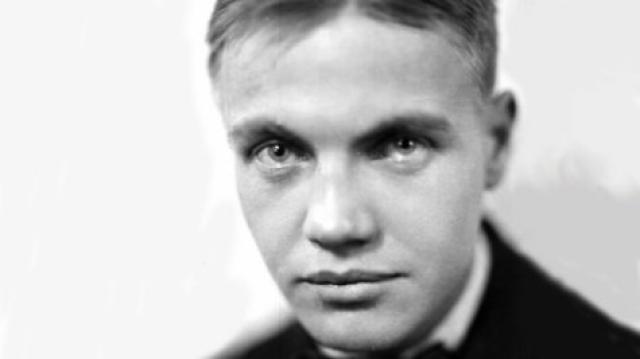
Early Life and Musical BeginningsGeorge Carl Johann Antheil, born in Trenton, New Jersey to German immigrants, proclaimed himself the "bad boy of music." Despite his precocious talents in music and writing, he never attended college. His mother's attempt to isolate him from musical instruments by sending him to the countryside only led him to order a piano.
Influences and European Breakthrough
At the age of six, Antheil began playing the piano. In Philadelphia, he studied under Constantine von Sternberg, a former pupil of Franz Liszt. Sternberg introduced him to European musical tradition. Antheil also delved into Dadaism and collaborated with Ernest Bloch, who initially questioned his abilities but later acknowledged his energy and enthusiasm.
The "Good Fairy": Mary Louise Curtis Bok
Through Sternberg, Antheil met Mary Louise Curtis Bok, who founded the Curtis Institute of Music. Bok provided Antheil with scholarships and supported his career, despite her disapproval of his behavior and music. Antheil's memoirs largely omitted her influence.
European Success and "Ballet Mécanique"
In 1922, Antheil embarked on a European tour, seeking success as a composer and pianist. While he gained notoriety in Berlin, Budapest, and Vienna, his concerts often resulted in financial losses. His most famous work, "Ballet Mécanique," was intended to be accompanied by an experimental film, which was eventually completed but shorter than the ballet itself.
Hollywood and Independent Cinema
Antheil moved to Hollywood in 1936 and became a successful film composer, collaborating with directors such as Cecil B. DeMille and Nicholas Ray. However, he criticized the film industry's hostility towards contemporary music and shifted his focus to independent directors.
Literary and Musical Diversification
Aside from film scores, Antheil composed for ballet and wrote six symphonies. His later music exhibited Romantic influences from Prokofiev, Shostakovich, and American music. He also ventured into literature, publishing a detective novel under the pseudonym Stacey Bishop and contributing insightful reviews to "Modern Music."
Autobiography and Legacy
Antheil's 1945 autobiography became a bestseller. He passed away in Manhattan on February 12, 1959, at the age of 58. Known for his experimentalism, eclecticism, and controversies, George Antheil remains a significant figure in 20th-century music and beyond.


