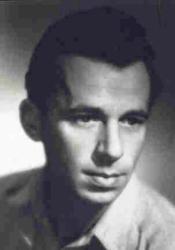
Georg Wilhelm Pabst
 Austria
- Biography of Georg Wilhelm Pabst
- Early Career
- Breakthrough in Film Industry
- Notable Works
- Later Career and Controversy
- Post-War Life and Legacy
Biography of Georg Wilhelm Pabst
Georg Wilhelm Pabst was an Austrian film director who made a significant contribution to the art of German cinema. He was born on August 27, 1885, in Raudnitz, now Rudnice nad Labem, in the family of Austrian railway official August Pabst and his wife Elizabeth. He grew up in Vienna, where he attended public and vocational schools, studied engineering, but soon became interested in theater.
Early Career
In 1906, Pabst started his acting career in St. Gallen and Zurich, and later worked in Salzburg, Prague, Berlin, and Danzig. According to his own recollections, he played 161 roles within two years. In 1910, he became a director at the German People's Theater in New York. In August 1914, while on a trip through Europe, he was captured in France at the beginning of World War I. In the prisoner of war camp near Brest, Pabst organized a theater and spent over four years studying French culture. He returned to Vienna in 1919 and worked as a director in Prague for a year.
Breakthrough in Film Industry
In 1920, Pabst became the artistic director of the avant-garde Neue Wiener Bühne (New Vienna Stage). It was during this time that he met film pioneer Karl Froelich. At Froelich-Film, Pabst became involved in the new art form as an actor, screenwriter, and assistant director. In 1922, he directed his first film, "Der Schatz" (The Treasure), which was done in an expressionistic style. The film explored themes of sex, money, and power, which would become recurring themes in Pabst's best works.
Notable Works
Some of Pabst's most important films from the height of his career include "Geheimnisse einer Seele" (Secrets of a Soul, 1926), "Die Liebe der Jeanne Ney" (The Love of Jeanne Ney, 1927), "Die Büchse der Pandora" (Pandora's Box, 1928), "Das Tagebuch einer Verlorenen" (Diary of a Lost Girl, 1929), "Westfront 1918" (1930), "Die Dreigroschenoper" (The Threepenny Opera, 1931), and "Kameradschaft" (Comradeship, 1931).
Later Career and Controversy
After Hitler came to power, Pabst remained in France, where he directed "Don Quichotte" (1933) starring Feodor Chaliapin. In late 1933, he tried to continue his career in Hollywood but struggled to adapt to American filmmaking methods. He returned to France and made a series of successful detective and spy films. In 1939, Pabst moved to Switzerland, fearing that he would be interned in France again in case of war. He planned to work in Hollywood but was caught off guard by the outbreak of World War II while visiting his mother in Germany. He chose to stay in Nazi Germany, which later led to his condemnation by many colleagues, historians, and critics for opportunism.
Post-War Life and Legacy
After the war, Pabst remained in Austria. In 1947, he directed "Der Prozess" (The Trial) in the Soviet sector of Vienna, which explored the theme of anti-Semitism based on a real case from the late 19th century. In 1955, he made two films in West Germany, "Der letzte Akt" (The Last Act) about the downfall of the Third Reich and "Es geschah am 20. Juli" (It Happened on July 20th) about the attempt to assassinate Hitler in 1944. Due to diabetes and Parkinson's disease, Pabst stopped working in the mid-1950s. He lived in Vienna and his estate in Styria. Pabst passed away on May 29, 1967, in Vienna due to a liver infection.