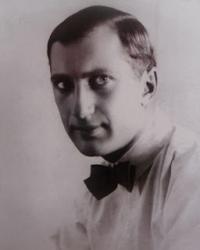
George Gissing
 Great Britain
- A brilliant student and a fallen start
- London, poverty, and the novelist’s life
- Private turmoil and later years
- A lasting realist
George Gissing turned hardship into some of the sharpest social novels of late Victorian England. His fiction followed people pressed by poverty, narrow social expectations, and the struggle to make a living through writing. “New Grub Street,” his portrait of the literary marketplace, remains especially admired, but his life was also marked by scandal, financial insecurity, and difficult relationships that gave his work a painful intimacy.
A brilliant student and a fallen start
George Robert Gissing was born in Wakefield, Yorkshire, on November 22, 1857, the eldest of five children. His father, Thomas, was a chemist with strong scientific and literary interests. Gissing excelled at school, won a scholarship to Owens College in Manchester, and stood out in English and classics. He seemed set for an academic future until his university career collapsed after he was caught stealing from fellow students. He had been using the money to support Nell Harrison, a young woman he had met in Manchester. Gissing was expelled and spent about a month in prison.
After his release, he went to the United States, where he worked as a tutor and later as a gas fitter. The year he spent moving through American cities brought stretches of poverty and isolation. He returned to England in 1877 and settled into tutoring and writing, with little money and few dependable prospects. His first novel, “Workers in the Dawn,” appeared in 1880, but attracted little readership and did not ease his circumstances.
London, poverty, and the novelist’s life
Gissing drew closely on the hardship he had witnessed in London. Early novels such as “Demos,” “Thyrza,” and “The Nether World” examined the grinding effects of poverty on working-class lives. His realism was unsparing, but it was also attentive to the ambitions, tenderness, and constrained choices of the people he portrayed. “The Nether World” (1889) became one of his most powerful studies of deprivation.
His best-known novel, “New Grub Street” (1891), shifted its attention to authors and journalists struggling to survive in an unforgiving publishing market. The book drew on his own precarious career: the pressure to earn money, the difficulty of sustaining serious work, and the compromises demanded by commercial success. “The Odd Women” (1893) turned to women’s independence and the limited options available to women without financial security. These novels gained him a lasting reputation among critics, even though his books never brought the financial stability he hoped for.
Gissing also wrote beyond fiction. A lifelong admirer of Charles Dickens, he published “Charles Dickens: A Critical Study” in 1898. His travel writing included “By the Ionian Sea” (1901), drawn from a journey through southern Italy. “The Private Papers of Henry Ryecroft,” published in 1903, offered a reflective voice shaped by the countryside, books, and the wish for a quieter life.
Private turmoil and later years
Gissing married Nell Harrison in 1879. Their relationship was strained by poverty and her declining health; she died of tuberculosis in 1888. He married Edith Underwood in 1891, and they had two sons, but the marriage also broke down and they separated. From 1899, he lived with Gabrielle Fleury, a Frenchwoman, and spent increasing amounts of time abroad as his health worsened.
He continued to write despite recurrent financial and physical strain. In 1901 he published “The Town Traveller,” and he was working on the historical novel “Veranilda” when illness forced him to remain in southern France. Gissing died of pneumonia at Saint-Jean-Pied-de-Port on December 28, 1903, aged 46. “Veranilda” was left unfinished and appeared after his death.
A lasting realist
Gissing’s novels gave form to lives often overlooked in more polished accounts of Victorian society: poor Londoners, educated people without prospects, aspiring writers, and women confronting limited choices. His prose could be bleak, but his work was never merely a record of misery. It examined the costs of social pressure and the resilience people summoned to keep going. Later generations have returned especially to “New Grub Street,” “The Nether World,” and “The Odd Women” for their precise, humane view of a changing society.