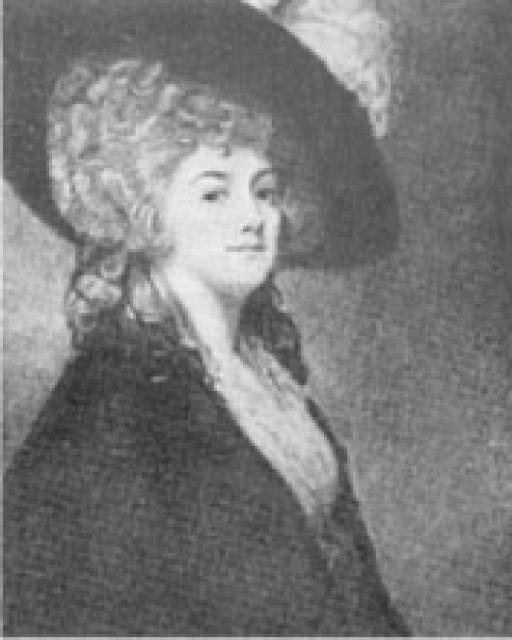
George Romney
 Great Britain
George Romney: English Portrait Painter
George Romney was an English portrait painter known for his ability to capture the charm and beauty of the human face in his works. Born in the early 18th century, Romney's artistic success in London quickly overshadowed that of his contemporary, Sir Joshua Reynolds, causing some jealousy from the renowned painter.
Romney, a somber and silent countryman, worked on his "heroic subjects" at night and possessed a rare talent for portraying the fleeting emotions of his subjects in his portraits. His ability to flatter his models contributed to his rapid rise in popularity, particularly among the most beautiful women of England.
Despite the praise he received during his lifetime, Romney's place in the history of 18th-century English portrait painting is often overshadowed by the likes of Thomas Gainsborough and Sir Joshua Reynolds. However, his undeniable talent, artistic flair, and unique individuality have secured him a rightful place in the annals of global portrait painting.
Biography
George Romney received little formal education and was the son of a cabinetmaker. His poor school performance led his father to abandon any hopes of academic pursuits and instead train him in the family trade. Remarkably, even in his later years, Romney's letters were often filled with spelling mistakes that astonished his recipients. Despite this, his father's instruction in violin-making ignited a passion for music that would rival his love for painting throughout his life.
Romney's artistic talent emerged at a young age, as he displayed an uncanny ability to produce portraits resembling the apprentices working in his father's workshop. One of the assistants, who also had artistic inclinations, provided Romney with monthly illustrated magazines to copy. It wasn't until the age of 21, however, that he began studying under established portrait painter Christopher Steele, who had spent time in Paris with Jean-Baptiste van Loo. Romney studied under Steele for four years before embarking on his own as a portrait painter, serving clients in Kendal and the surrounding counties of Lancaster and York. At the age of twenty-seven, leaving behind his wife and two children, Romney set off for London in search of greater opportunities.
In the mid-18th century, London was home to over two thousand portrait painters, making it a challenging environment for any artist to achieve recognition and popularity. However, Romney's exceptional talent quickly brought him success. In 1775, he leased a large house on Cavendish Square, where he experienced the most brilliant and happy years of his life. Like Reynolds, Romney kept a diary in which he meticulously recorded the names of all his clients. In less than twenty years, his studio attracted over nine thousand sitters, including notable figures such as philosopher Edmund Burke, historian Thomas Turton, renowned actors Sarah Siddons and Garrick, artist and poet William Blake, and countless exquisite English women. It seemed that the majority of England's wealthiest, most renowned, and significant personalities in the late 18th century could not resist a visit to Romney's studio.
Romney completed his somewhat haphazard artistic education in 1773 when he embarked on a trip to Italy - an essential pilgrimage for any 18th-century artist aspiring to professionalism. Italy profoundly influenced Romney, and he became a staunch adherent of classicism, evident in his love for balanced compositions, smooth rhythms, and clear contours, as well as his affinity for local and vibrant color combinations. The works of Correggio in Parma and the sculptures of Rome particularly captivated him. Later, Romney would gather a small collection of splendid casts of sculptures such as "Laocoön," "Apollo Belvedere," and others, displaying them in one of the rooms of his extensive house. No biography or exploration of Romney's art would be complete without mentioning his encounter with his muse - the infamous adventuress Lady Hamilton. Emma Hart, as she was known at the time, first crossed the threshold of Romney's studio when he was nearly fifty years old and she was nineteen. She perfectly embodied his ideal of female beauty and became the central figure in many of his works. He painted and drew her as Cassandra, Calypso, Mary Magdalene, or simply as herself, dressed modestly and sitting calmly before the artist, as seen in the 1783 portrait. Their collaboration continued until 1791 when she married Sir William Hamilton and left London for Naples, disappearing from Romney's life forever.
From this time onwards, Romney's artistic career began to decline. Although he occasionally produced remarkable works such as his 1782 self-portrait, his focus shifted away from portraiture. He immersed himself in the execution of large and complex compositions inspired by the works of Shakespeare and Milton, aligning with the romantic spirit of late 18th-century English painting. These imagined compositions presented challenges for Romney, but he held them in higher regard than his portraits, which he viewed merely as a means of making a living. Nevertheless, it is his portraits, with their lively and immediate charm, that endeared Romney's art to future generations. Today, no museum collection is complete without his portraits. The Hermitage Museum houses several of his works, including the stern and expressive portrait of S.R. Vorontsov, the Russian ambassador to England, and the exquisite portrait of the enchanting Mrs. Harriet Greer.
Romney's time in his new home was short-lived, as his chronic illness, which had plagued him throughout his life, worsened. Frequent episodes of depression, fear, and irritability led Romney to return to his hometown in 1799 to be cared for by his devoted wife, who had patiently waited for him for nearly forty years. He arrived broken and ill, unable to work or think. She dutifully nursed him, and three years later, she buried him in the local churchyard.
Sources:
V. Polyakov, 1984. "One Hundred Memorable Dates: Artistic Calendar. Annual Illustrated Edition." Moscow, 1984.



