Gerda Taro
- Early life and flight from Germany
- The Capa identity and the Spanish Civil War
- Brunete and her death
- Legacy
Early life and flight from Germany
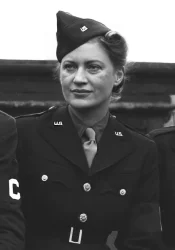
Gerda Taro was born Gerta Pohorylle in Stuttgart, Germany, on 1 August 1910. She came from a Jewish family with roots in eastern Europe and studied in Stuttgart and Leipzig. As a young woman she became involved with left-wing circles at a time when the Nazi movement was gaining power. After being detained during political repression in Germany, she left for Paris in 1933.
In Paris, she worked to make a life as an émigré and entered the growing world of press photography. She met the Hungarian photographer André Friedmann in 1934. Their personal and professional partnership soon became central to the way both photographers presented their work.
The Capa identity and the Spanish Civil War
Pohorylle adopted the name Gerda Taro, while she and Friedmann devised the persona of an American photographer called Robert Capa. The invented identity helped them sell photographs in a competitive market and gave their work a memorable byline. Friedmann later continued to use the name Robert Capa, while Taro increasingly established herself as a photographer in her own right.
When the Spanish Civil War broke out in 1936, Taro and Capa travelled to Spain to photograph the conflict. They worked alongside fellow photographer David Seymour, known as Chim, and produced images for European newspapers and magazines sympathetic to the Spanish Republic. Taro photographed soldiers, civilians, refugees, and life behind the front lines. Her pictures combined immediacy with attention to the people caught up in war, rather than treating the conflict only as a panorama of battles.
At first, many images produced by the pair circulated without clear individual credit. Taro’s independent career grew in 1937 as she took assignments under her own name and worked increasingly separately from Capa. Later research into negatives and contact sheets, including material recovered in the so-called Mexican Suitcase, helped identify photographs that had previously been credited to Capa. The process has restored a larger body of work to Taro, although the attribution of some images remains debated.
Brunete and her death
In July 1937, Taro covered the Republican offensive at Brunete, west of Madrid. The fighting intensified and the Republican forces began to retreat. During the confusion, a tank struck the vehicle on which Taro was travelling, crushing her. She was taken to a hospital at El Escorial and died of her injuries on 26 July, aged twenty-six.
Taro is often described as the first woman photojournalist killed while reporting from a war zone. Her death made her a symbol of the risks faced by correspondents who worked near active combat, but her reputation rests equally on the photographs she made during her brief career.
Legacy
For decades, her work was overshadowed by the fame of the Robert Capa name and by the difficulty of separating the partners’ photographs. Archival research and exhibitions since the late twentieth century have made her authorship and individual style more visible. Taro is now recognized as a pioneering war photographer whose images offer a close, human record of the Spanish Civil War and of the civilians and fighters living through it.