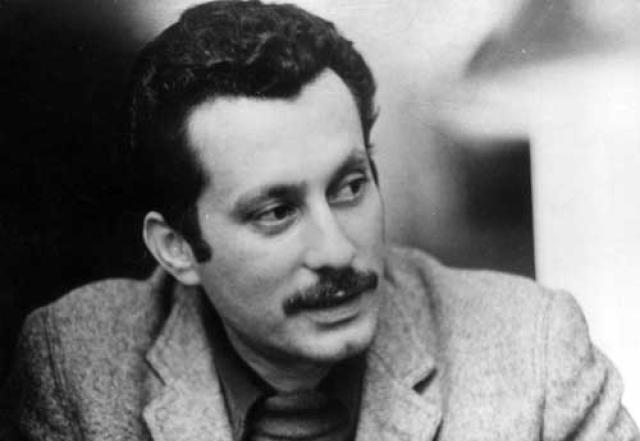
Ghassan Kanafani
- Early Life and Family
- Displacement and Education
- Journalism and Activism in Kuwait
- Literary Career in Beirut
- Literature of Resistance
- Political Engagement and the NFLP
- Literary Awards and Legacy
Early Life and Family
Ghassan Kanafani, a prominent Palestinian writer and political activist, was born in Acre, Palestine, in 1936 to a Sunni Muslim family. He attended a French missionary school as a child until the outbreak of the 1948 Arab-Israeli war forced his family to flee their homeland.
Displacement and Education
After briefly settling in Lebanon, Kanafani's family moved to Damascus, where he completed his education and obtained a teaching certificate in 1952. He then enrolled in the Arabic Literature department at Damascus University but was expelled in 1955 for his involvement in the Arab Nationalist Movement.
Journalism and Activism in Kuwait
In search of work, Kanafani traveled to Kuwait in 1955, where he spent the next eight years teaching at an elementary school and editing the Arab Nationalist Movement's newspaper, "Al-Rai." During this time, he began writing short stories and studying Marxism.
Literary Career in Beirut
In 1960, Kanafani moved to Beirut and became a correspondent for the newspaper "Al-Hurriya." However, his lack of official documents led to his departure in 1962. He subsequently became the editor-in-chief of the progressive newspaper "Al-Muharrir" and its weekly supplement, "Palestine." His most renowned novel, "Men in the Sun," was published in 1963 and translated into several foreign languages.
Literature of Resistance
Kanafani's writing is characterized by a strong connection between political and historical events and literary narrative. He coined the term "literature of resistance," which refers to the works of Palestinian writers who protested the Zionist colonization of Palestine, the suffering of the Palestinian people, and their struggle for liberation.
Political Engagement and the NFLP
In 1967, Kanafani played a role in the formation of the Popular Front for the Liberation of Palestine (PFLP), a radical Marxist offshoot of the Arab Nationalist Movement. He founded and became the editor-in-chief of the PFLP's publication, "Al-Hadaf." As a prominent member of the PFLP's political bureau, Kanafani was an outspoken advocate for the Palestinian cause.
Literary Awards and Legacy
Kanafani was recognized for his significant contributions to Arabic literature, winning the Lebanese Literature Prize in 1966 and the Lotus Prize posthumously in 1975. His writings continue to inspire and influence Palestinian and Arab literary discourse.


