Giovanni Bosco
 Italy
Italy- St. John Bosco
- Founding the Oratory and the Salesian Society
- Expansion of the Salesian Family
- Pedagogical System and Innovations
- Political and Social Engagement
- Canonization and Patronage
St. John Bosco
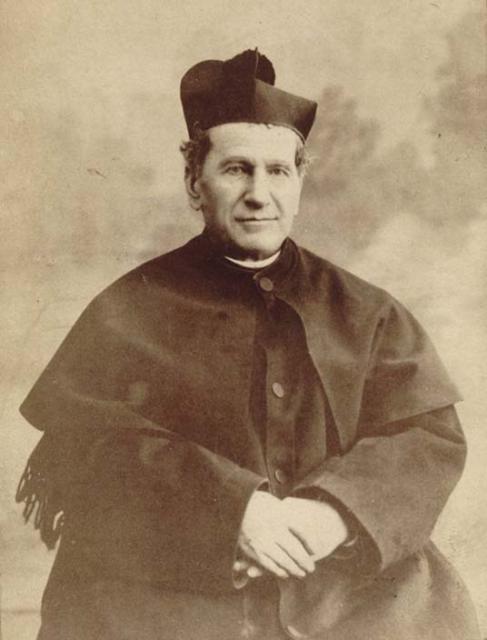
Early Life and Call to PriesthoodBorn into a poor peasant family, Don Bosco lost his father at the age of two. In his youth, he experienced a dream that inspired him to dedicate his life to educating abandoned boys. He attended seminary in Chieri and then the theological college in Turin, where he was ordained a priest on June 5, 1841.
Founding the Oratory and the Salesian Society
In December 1841, Don Bosco established a permanent oratory in Turin for working youth, offering a "parish for the teenagers without a parish." In 1847, the first homeless boys took up residence at the oratory, and that same year, Don Bosco opened a second oratory.
In 1850, he founded a boarding school for students (housing 121 by 1857) and a mutual aid society for workers. From 1853 to 1862, Don Bosco opened six workshops and a printing press at the oratory. By 1862, 1,200 children attended the oratory, 600 of whom lived there. During these years, he also established the seminary at Valdocco for priests from poor backgrounds.
To support his youth work, Don Bosco founded the Society of St. Francis de Sales on January 26, 1854 (now known as the Salesians of Don Bosco). The order's constitution was approved by Pope Pius IX on April 3, 1874. By the end of Don Bosco's life, the society had 773 members and 64 Salesian institutions in six countries worldwide: Italy, France (from 1877), Argentina (from 1879), Spain (from 1881), Brazil (from 1883), and Chile (from 1887).
Expansion of the Salesian Family
In 1872, together with St. Mary Dominic Mazzarello, Don Bosco co-founded the Salesian Sisters of St. John Bosco. He also established the Salesian Cooperators, a form of "third order," which was approved by the Pope on May 9, 1876.
By the time of Don Bosco's death in 1888, the institutions of the Salesian Family had educated over 100,000 youths. Among his most famous pupils were St. Dominic Savio (1842-1857) and St. Luigi Orione (1872-1940).
Pedagogical System and Innovations
Don Bosco was known for his innovative approach to education. He emphasized a "preventive system," based on affection, trust, and avoiding punishments. He also wrote several educational textbooks and published 204 issues of the "Library of Italian Youth," featuring古典 Greek and Latin texts.
Political and Social Engagement
In the complex political climate of his time, Don Bosco remained a staunch supporter of Pope Pius IX while maintaining good relations with the Piedmontese government. He acted as a mediator between the Vatican and the Savoy dynasty on several occasions.
Canonization and Patronage
Don Bosco was beatified on June 2, 1929, and canonized on April 1, 1934. He is the patron saint of apprentices, editors, printers, and youth. In recent years, there has been a growing movement to recognize him as the patron saint of magicians, based on his love of performing tricks for his friends and students. His feast day in the Catholic Church is January 31.