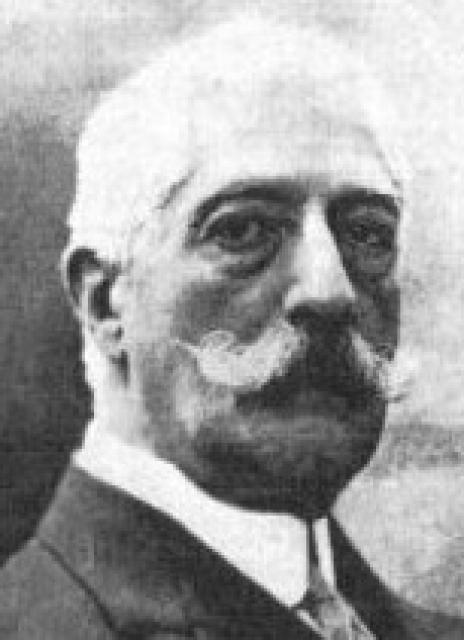
Giovanni Verga
 Italy
Italy- Biography of Giovanni Verga
- Early Life
- Literary Career
- Moving to Florence and Milan
- Notable Works and Later Life
Biography of Giovanni Verga
Giovanni Verga, an Italian realist writer, is widely known for his novels depicting life in Sicily, especially the novel "I Malavoglia" (The House by the Medlar Tree) and the collection of stories "Vita dei Campi" (Life in the Fields).
Early Life
Verga was born into a prosperous Sicilian family near Catania. His father, Giovanni Battista Catalano Verga, belonged to a minor aristocratic family, while his mother, Caterina di Mauro, came from a wealthy merchant family. From a young age, Verga began his literary career by writing a historical novel titled "Amore e Patria" (Love and Homeland). However, the novel was not published based on the advice of a local priest, who was a family friend and Verga's mentor in his early writing attempts.
Literary Career
Despite initially enrolling in the law faculty at the University of Catania at his father's insistence, Verga studied law for less than two years before deciding to pursue a career in literature. Encouraged by his mother, who provided financial support, Verga published "I Carbonari della montagna" (The Carbonari in the Mountains) in 1861 and 1862, which focused on the liberation movement led by Giuseppe Garibaldi. In 1863, he continued his realistic literary cycle with the novella "Sulle lagune" (On the Lagoons). During this time, Verga became a passionate supporter of the unification of Italy with Rome as its capital.
Moving to Florence and Milan
Between 1860 and 1864, Verga served in the National Guard before leaving Sicily and moving to Florence, the capital of Italy at the time, and later to Milan. From 1869, Florence became Verga's place of residence, and for almost 20 years, with rare interruptions, he lived in Milan. Verga is considered the founder of verismo, the main literary movement in Italian literature during the mid-19th century, characterized by a naturalistic approach to depicting reality. He was personally acquainted with Émile Zola, who served as an inspiration for Verga's style. Dialogue was a prominent feature in Verga's works, serving as a means of psychological character portrayal.
Notable Works and Later Life
In addition to "I Malavoglia," other significant works by Verga include "Eros" and "La Tigre" (The True Tigress). In 1880, his collection of stories "Vita dei Campi" was published, including works such as "Fantasicheria" (Whims), "La lupa" (The She-Wolf), which depict the lives of Sicilian peasants, and "Cavalleria rusticana" (Rustic Chivalry), which was later adapted into a play and opera by Pietro Mascagni. Verga's story "Malaria" is one of the earliest recorded descriptions of the disease in literary literature.
Verga had planned to write a series of five major novels, each illustrating increasing human ambitions and aspirations, from basic struggle for survival in "I Malavoglia" to the pursuit of luxury, power, and sensual pleasures in a novel titled "Uomo di lusso" (Man of Luxury). However, apart from "I Malavoglia," only one novel, "Mastro Don Gesualdo" (Master Don Gesualdo) (1889), was completed and is considered the pinnacle of Verga's career. In 1894, Verga returned to Sicily and gradually distanced himself from literary activity, occasionally reissuing edited versions of his previous works. In 1920, he was elected as a senator from his native village of Vizzini. Giovanni Verga passed away in 1922 due to a stroke.
To honor the writer, his name is immortalized in the city of Catania, where a monument to the characters from his novel "I Malavoglia" is erected in the square named after him.