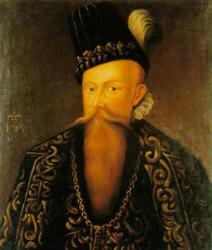
Gistav II Adolf
 Sweden
- Biography of Gustav II Adolf
- Early Life and Influences
- Foreign Relations and Wars
- Achievements and Legacy
Biography of Gustav II Adolf
Gustav II Adolf, also known as Gustavus Adolphus, was the King of Sweden and was born in 1594 in Nyköping. He ascended to the throne in 1611 and his twenty-year reign is considered one of the most brilliant in Swedish history. His significance also extended to world history. Gustav's father, Charles IX, dedicated a lot of effort and care to his education and achieved the desired results. Gustav was one of the most educated rulers of his time, speaking fluently in German, Dutch, French, Italian, and Latin. He also had knowledge of Russian and Polish languages. Among the sciences, Gustav was particularly interested in mathematics and history.
Early Life and Influences
From the age of 11, Gustav participated in the meetings and councils of his father and accompanied him during the reception of foreign envoys. Two individuals had a significant influence on young Gustav - Johan Skytte and Axel Oxenstierna. In the beginning of his reign, Gustav appointed Oxenstierna as his chancellor and maintained a sincere friendship and loyalty to him until his death.
Foreign Relations and Wars
When Gustav ascended to the throne, he inherited hostile relations with the aristocracy and ongoing wars with Denmark, Russia, and Poland. Gustav managed to win over the aristocracy by granting them privileges and promising to align with the wishes of the parliament. The war with Denmark, also known as the Kalmar War, ended in 1613 with the Treaty of Knäred. Gustav managed to retain the cities of Kalmar and Elfsborg and secured them for Sweden with a payment of one million thalers.
Tensions between Sweden and Russia had already arisen during the reign of Gustav's father. The war with Muscovy, with the goal of pushing the Russians away from the Baltic Sea into the Gulf of Finland, ended in 1617 with the Treaty of Stolbovo. Sweden gained control over the cities of Jamburg, Ivangorod, Koporye, Noteborg, and Kexholm. Gustav expressed his satisfaction with the results and stated before the parliament, "Now the Russians are separated from us by lakes, rivers, and swamps, through which it will not be so easy for them to penetrate."
After the conclusion of the war with Russia, Gustav turned his attention to Poland. The prolonged dynastic struggle in Poland had significant implications for the entire Europe as it became a moment in the struggle between Catholicism and Protestantism. The Polish war served as a prelude to the war with the House of Habsburg. The war was initially fought on Polish territory until 1621 when the Swedes captured Riga and shifted the conflict to Courland. During a truce that lasted until 1625, Gustav focused on internal affairs, reforming the military and navy. In 1626, the Prussian War, also known as the War of the Mantuan Succession, began. England, France, and the Netherlands, wanting to involve Gustav in the German War, offered their mediation to reconcile him with Poland. Austria supported Poland. In 1629, a six-year truce was concluded between Poland and Sweden. Gustav retained Livonia and, in Prussia, the cities of Elbing, Braunsberg, Pillau, and Memel.
In 1630, Gustav II Adolf joined the Thirty Years' War. The reasons for his involvement in the pan-European conflict were both political and religious. Gustav saw the attempt of Ferdinand II to gain control over the Baltic Sea and feared that Ferdinand, once achieving this, would support Sigismund III in claiming the Swedish throne. Gustav offered support to Stralsund. The victory of the Catholics over the Protestants undoubtedly threatened Protestant Sweden. Political and religious reasons were so closely intertwined that it was impossible to separate one from the other. Some scholars solely emphasize political motives, while others consider religious motives. In Germany, Gustav fought against the best military commanders of his time, including Johan Tilly at Breitenfeld (7-17 September 1631) and Albrecht von Wallenstein at Lützen. He was killed in the last battle on 6 November 1632.
Achievements and Legacy
Gustav II Adolf's reign marked a period of constitutional and educational progress in Sweden. Internally and externally, Sweden's greatness during this period was directly linked to the Thirty Years' War. Gustav brought Sweden closer to the rest of Europe through the war, and he gave Sweden an impetus for progress. He raised the spirit of the Swedish people and placed Sweden alongside the major European powers. Gustav was a great politician and fighter for religious freedom. To disregard this duality means to deliberately focus on only one aspect, neglecting the other.
During his reign, Gustav II Adolf made several important reforms and achievements. He established a permanent parliament, known as the Riksdag, which was divided into various committees. He simplified the tax system, developed trade relations with Russia, the Netherlands, Spain, and France, restored Uppsala University, and established schools. Gustav was also a great military tactician and introduced a new method of warfare. In addition to numerous letters, Gustav left behind a series of historical works.
In conclusion, Gustav II Adolf's reign left a significant impact on both Swedish and world history. His military victories and political achievements elevated Sweden's status and brought the country closer to European powers. Gustav's commitment to religious freedom and his contributions to education and governance continue to be recognized as important aspects of his legacy.