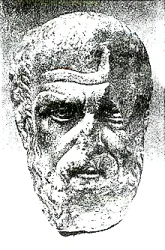
Glycerius
Glycerius held the Western Roman imperial title for little more than a year, during a period when emperors rose and fell through military backing, court politics, and recognition from Constantinople. Proclaimed at Ravenna in 473, he faced an immediate challenge from the Eastern emperor Leo I, who supported Julius Nepos as a rival claimant. Glycerius was deposed in 474 and made bishop of Salona. Though the surviving record is sparse, his brief rule offers a clear glimpse of the fragile politics of the late Western Empire.
An Emperor Chosen at Ravenna
Very little is known about Glycerius before his elevation. He had served as comes domesticorum, an officer who commanded the imperial household guard. After the death of Emperor Olybrius in 472, the western throne remained vacant for several months. The powerful Burgundian general Gundobad backed Glycerius, who was proclaimed emperor at Ravenna in March 473.
The choice reflected the political reality of Italy, where military commanders and their allies could determine who wore the imperial title. But an emperor in the West also needed support from the Eastern Roman court. Leo I did not recognize Glycerius and instead selected Julius Nepos, a relative of the empress and military governor of Dalmatia. The two men therefore represented competing claims to the western throne.
Glycerius ruled from Ravenna, the seat of the western court. His government faced pressure from groups moving across Roman territories and from the weakening ability of the state to control its borders. The sources credit him with some success in managing threats through diplomacy and force. One account says he persuaded the Ostrogothic leader Vidimir to move from Italy into Gaul, where other Gothic groups were already established.
Deposition and the See of Salona
In 474, Julius Nepos arrived in Italy with support from the eastern empire. Glycerius appears to have offered little resistance. Nepos captured him at Portus, near the mouth of the Tiber, and removed him from the imperial office. The change of power showed that Glycerius’s position had depended heavily on local backing and could not withstand an eastern-backed rival.
Rather than having him executed, Nepos arranged for Glycerius to become bishop of Salona in Dalmatia. The appointment removed the former emperor from politics while assigning him a religious office in a region connected to Nepos’s own power base. Salona was an important city and ecclesiastical center on the Adriatic coast.
The sources do not provide a full account of Glycerius’s life as bishop. His later career is largely obscured, and reports linking him to subsequent political intrigues are difficult to verify. He is known primarily for the unusual path from imperial rule to the episcopate.
A Reign in a Fragmented Empire
Glycerius’s brief reign took place amid a broader struggle over authority in the western provinces. The emperor’s title remained important, but the practical power behind it was fragmented among generals, regional rulers, and the court at Constantinople. Glycerius’s appointment by Gundobad was not accepted by Leo I, and the arrival of Nepos demonstrated that eastern recognition and military support still mattered.
The written record is limited, but at least one imperial law survives from Glycerius’s reign. It addressed the issue of simony, the buying or selling of church offices, and was sent to the praetorian prefect Himilco. Such legislation shows that even a short-lived government continued to engage with civil and religious administration.
Glycerius is not the final ruler associated with the Western Roman Empire. Julius Nepos succeeded him and retained the imperial claim after being driven from Italy; later, Romulus Augustulus was deposed in 476 by Odoacer. The end of western imperial rule was a process, not a single event, and Glycerius occupied one short chapter in that longer transition.
Legacy
Glycerius remains a comparatively obscure emperor because he ruled briefly and left few records. His significance lies in what his story reveals about late Roman politics: the western throne could be claimed at Ravenna, but its legitimacy remained contested, and the eastern court could intervene decisively.
His deposition did not erase the office or immediately end Roman imperial claims in the West. Instead, it exposed the fragile network of support on which the emperors depended. Glycerius’s brief passage from commander to emperor to bishop captures the instability of a political order undergoing profound change.