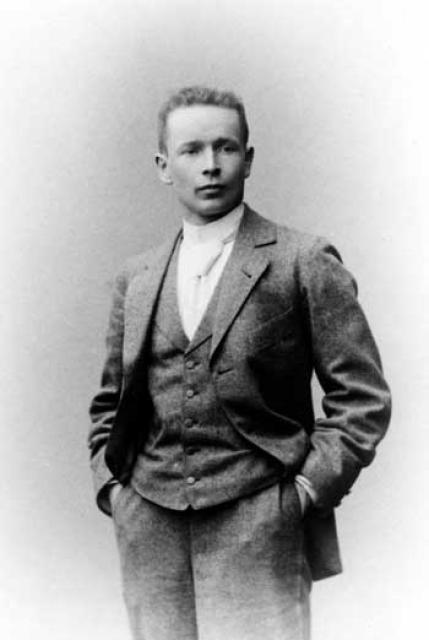
Gottlib Saarinen
 Finland
- Eliel Saarinen: Pioneer of Finnish National Romanticism
- National Romanticism
- Helsinki Central Railway Station
- Transition to Modernism
- Influence on Urban Planning
- Legacy
Eliel Saarinen: Pioneer of Finnish National Romanticism
Early Life and EducationBorn in Rantasalmi, Finland, Eliel Saarinen embarked on his artistic journey in 1893. He pursued painting at the University of Helsinki and architecture at the Helsinki Polytechnic Institute.
National Romanticism
Saarinen played a pivotal role in the development of Finnish National Romanticism in architecture. His early works, including the Finnish Pavilion at the 1900 Paris World's Fair and the Vitrea Atelier in Hvitträsk, combined elements of traditional Finnish craftsmanship with influences from British Arts and Crafts and German Jugendstil.
Helsinki Central Railway Station
Saarinen's masterpiece, the Helsinki Central Railway Station (1910-1914), epitomized Finnish National Romanticism. Its picturesque design, adorned with sculptures and ornaments, showcased a harmonious blend of national motifs with rationalist principles.
Transition to Modernism
In the 1920s and 1930s, Saarinen explored Gothic Revival and Neoclassicism. However, after 1937, he collaborated with his son, Eero Saarinen, incorporating modernist elements into their designs, such as the Christ Church Lutheran in Minneapolis (1950).
Influence on Urban Planning
Saarinen's early urban planning projects, particularly his "Greater Helsinki" plan (1915-1918), advocated for urban decentralization. His ideas had a profound impact on city planning theory and practice in Finland and Scandinavia post-World War II.
Legacy
Eliel Saarinen's architectural legacy extends beyond his iconic buildings. His innovative approach to urban design continues to inspire architects and city planners worldwide. As a pioneer of Finnish National Romanticism and a master of modern architecture, Saarinen's influence has left an indelible mark on the built environment.


