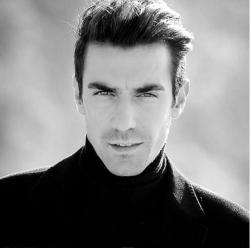
Graham Chapman
 Great Britain
Graham Chapman brought an unlikely combination of medical training, cool composure and gleefully surreal instinct to British comedy. As a founding member of Monty Python, he helped create a style that delighted in breaking the rules of sketches—and then stepping into the frame as the stern Colonel to announce that the whole thing had become too silly. He also played King Arthur and Brian in two of the troupe’s best-known films, giving its anarchic humor a memorable straight-faced center.
From medicine to comedy
Born on January 8, 1941, in Leicester, England, Chapman studied medicine at the University of Cambridge and St Bartholomew’s Hospital Medical College. At Cambridge, he joined the Footlights, the celebrated student comedy society, where he met John Cleese. The two became writing partners, and Chapman’s enthusiasm for performing and writing gradually outpaced the career in medicine he had trained for. He qualified as a doctor and practiced for a time before committing himself to comedy.
Chapman and Cleese worked together on British television and radio productions including The Frost Report and At Last the 1948 Show. Chapman also drew on his medical background when writing for the television sitcom Doctor in the House. These early projects helped sharpen the pair’s writing and brought them into the creative circle that would become Monty Python.
The Python who stopped the sketch
Monty Python’s Flying Circus debuted on the BBC in 1969. The series turned sketch comedy into a freewheeling mix of characters, abrupt endings, animation and ideas that seemed to veer off just when viewers expected a familiar punchline. Chapman’s dry delivery made him a natural anchor amid the chaos. His Colonel would interrupt a sketch and declare it too silly to continue, a joke that captured the troupe’s playful impatience with comedy’s usual conventions.
He was also a prolific character actor, appearing as policemen, pompous officials and bizarre eccentrics. In the troupe’s films, he took on two of its most famous leading roles: King Arthur in Monty Python and the Holy Grail (1975) and the title character in Monty Python’s Life of Brian (1979). His controlled, almost unflappable manner gave both characters a comic contrast with the absurd worlds around them. Chapman also appeared in Monty Python’s Meaning of Life (1983), while continuing to write, perform and make appearances beyond the group.
Life beyond the screen
Chapman’s offstage life was marked by candor as well as adventure. He was openly gay at a time when that visibility could carry real social costs, and he shared his life with writer and partner David Sherlock for more than two decades. He later spoke publicly in support of gay rights. His 1980 memoir, A Liar’s Autobiography: Volume VI, mixed humor with reflections on coming out and on his struggle with alcoholism.
Alcoholism affected his work and personal life, including during the making of Holy Grail. He achieved sobriety in 1977 and went on to take part in the Dangerous Sports Club, a group known for its appetite for outlandish stunts. The contrast between a trained physician, a committed comic provocateur and an adventurous public personality made him one of the more surprising figures in the Python circle.
A lasting comic voice
Chapman continued to write and perform in the years after Monty Python’s Flying Circus ended. His screen work included The Odd Job and Yellowbeard, and he joined his former colleagues for later Python projects. In 1988, he was diagnosed with cancer of the tonsils; the disease later spread to his spine. He died on October 4, 1989, at 48, one day before the twentieth anniversary of the first broadcast of Flying Circus.
His death brought an abrupt end to the original group’s era, but the performances remain central to Monty Python’s legacy. Chapman’s steady presence helped make its most outrageous ideas land: he could embody a king, a biblical everyman or a pompous official with the same grave conviction. That straight-faced spark still gives the troupe’s unruly comedy much of its enduring force.