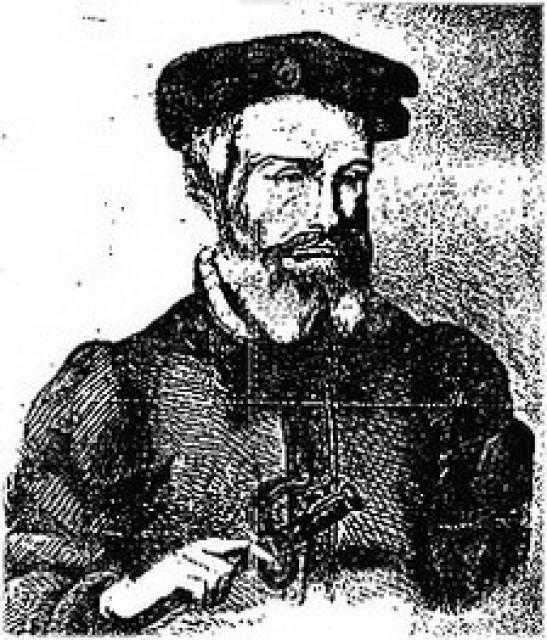
Guillen de Castro
 Spain
Spain- Guillem de Castro: A Spanish Playwright of Note
- Friendship and Influence
- Prolific Playwright
- "The Youth of the Cid" and Corneille's Influence
- Other Notable Works
- Emotional Depths and Poetic Beauty
- Divine and Human Love
- Influence on Cervantes and Caldeŕon
Guillem de Castro: A Spanish Playwright of Note
Early Life and Literary CircleGuillem de Castro was a renowned Spanish playwright born with a precocious poetic talent. He became a prominent member of the literary circle known as Los Nocturnos. Despite his literary acclaim, Castro's life was marked by financial hardship.
Friendship and Influence
Castro forged close relationships with fellow literary giants Lope de Vega and Miguel de Cervantes. Cervantes held Castro's writing in high regard, praising its grace and charm.
Prolific Playwright
Castro penned over 40 plays, all highly esteemed in Spain. Some of his works contain elements of ribaldry. Among his most celebrated plays is "The Youth of the Cid" ("Mocedades del Cid").
"The Youth of the Cid" and Corneille's Influence
This play gained immense popularity and served as the inspiration for Corneille's "Le Cid." However, Castro's work surpassed Corneille's in both artistic merit and dramatic power. Castro drew heavily from traditional ballads about the Spanish hero El Cid Campeador, incorporating them into the play with great skill.
Other Notable Works
Castro also excelled in dramatizing ancient romances in his plays: "El conde de Irlos," "El nacimiento de Montesinos," "El desenga?o dichoso," and "El conde Alarcos." His comedy "Enga?arse enga?ando" boasts intricate psychological insights.
Emotional Depths and Poetic Beauty
Castro's plays often showcase poignant and moving moments, dramatic tension, and lyrical beauty. "Pagar en propia moneda" and "La justicia en la piedad" are particularly noteworthy in this regard.
Divine and Human Love
"El prodigio de los montes, y m?rtir del Cielo, Santa B?rbara" is a highly symbolic play that explores the contrast between divine and human love. It served as an inspiration for Calderón's "El Magico Prodigioso."
Influence on Cervantes and Caldeŕon
Despite his attempts to adapt Cervantes' novellas into plays, Castro's efforts were less successful. As a disciple of Lope de Vega, Castro inherited his mentor's flowing yet forceful verse. His depiction of passions is fiery, while his expression of tender emotions is characterized by remarkable sensitivity.



