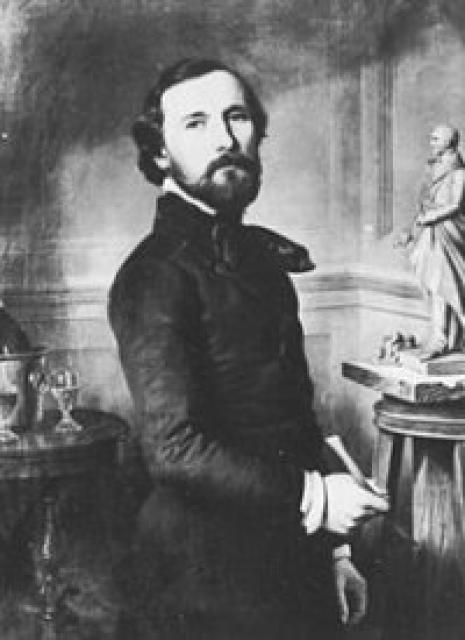
Gustav Hermann Blaser
 Germany
- Early Life and Education
- Influence of Rome
- Monumental Sculptures
- Architectural Collaborations
- Busts and Smaller Works
- Legacy and Recognition
Early Life and Education
August Julius Jonas Blæser was born in Elberfeld, Germany in 1813. He studied sculpture under Christian Daniel Rauch from 1834 to 1843, honing his skills at the Royal Academy of Arts in Berlin.
Influence of Rome
In 1843, Blæser traveled to Rome, where he spent the next two years studying ancient art and classical techniques. This experience had a profound impact on his artistic style.
Monumental Sculptures
Upon his return to Berlin in 1845, Blæser became known for his grand monumental sculptures. He executed the majestic equestrian statues of Frederick William III and Frederick William IV in Cologne, colossal works that showcased his mastery of scale and detail.
Architectural Collaborations
Blæser's talents extended beyond public monuments. He contributed terracotta allegories to the Brandenburg Gate in Potsdam, representing architecture, painting, and poetry. For the Kuppelhalle of the Berlin City Hall, he sculpted the monumental statue of Prophet Daniel.
Busts and Smaller Works
In addition to his monumental sculptures, Blæser created numerous busts and statuettes of notable figures, such as Dante, Petrarch, Tasso, and Ariosto. These intimate works displayed his keen eye for human expression and psychological depth.
Legacy and Recognition
August Julius Jonas Blæser left an enduring mark on German sculpture. His ability to merge classicism with a dynamic artistic sensibility earned him critical acclaim and a place among the most influential sculptors of his time. His works continue to grace public spaces and museums around the world, inspiring generations of artists and art enthusiasts alike.



