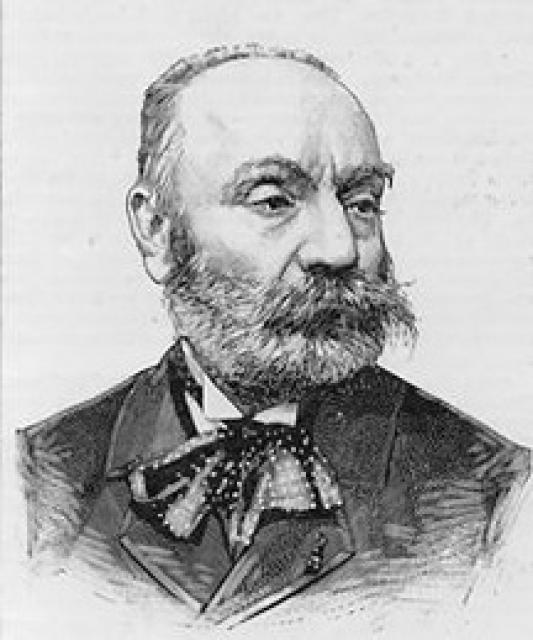
Gustave Boulanger
 France
- Gustave Boulanger: French Salon Painter and Orientalist
- Journey to Italy
- Classical Antiquity and Salon Success
- Major Commissions and Legacy
Gustave Boulanger: French Salon Painter and Orientalist
Early Life and TrainingGustave Boulanger was born in France and studied painting at the prestigious École des Beaux-Arts in Paris under the tutelage of renowned artists Paul Delaroche and Pierre-Jules Jollivet.
Journey to Italy
In 1854, Boulanger embarked on a two-year educational trip to Italy. His painting "Caesar at the Rubicon" garnered him significant acclaim in Rome. Inspired by his Italian sojourn, he created notable works such as "Maestro Palestrina," "The Arab," and "Kabyle Encampment."
Classical Antiquity and Salon Success
Boulanger's sketches and studies during his Italian journey became the foundation for his paintings depicting ancient themes, including "Lucretia," "Lesbia," and "The Garland Sellers in Pompeii." His works exhibited a style similar to that of Jean-Léon Gérôme and were greatly admired by Emperor Napoleon III, who commissioned Boulanger to decorate his Parisian palace in the "Pompeian style."
Major Commissions and Legacy
Boulanger's artistry extended beyond paintings to include murals at the opulent Opéra Garnier in Paris. His Orientalist works, portraying scenes from North Africa, captured the attention and fascination of the European public. Boulanger's contribution to French art in the 19th century left an enduring legacy, cementing his place as a prominent salon painter and orientalist.