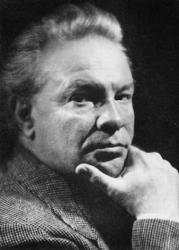
Hans Bulow
 Germany
Biography of Hans Bülow
Hans Bülow was a renowned pianist and conductor, born on January 8, 1830 in Dresden, Germany. He was the son of the German poet Karl von B. Bülow received piano lessons from Fr. Wick and theoretical education from Max Karl Eberwein starting in 1844. In 1846, he made his debut as a pianist in Stuttgart, where he also attended a gymnasium. Bülow moved to Leipzig in 1847 to study law and took counterpoint lessons from Hauptmann. He continued his legal education in Berlin from 1849 to 1850. However, his passion for music led him to pursue a career in the field.
Career
To pursue his musical aspirations, Bülow sought guidance from Richard Wagner in Zurich, whom he had known since his time in Dresden. After a short period as a conductor in St. Gallen and Zurich, he joined Franz Liszt in Weimar in 1851 as his pianist and stayed for two years. Bülow established a name for himself as a pianist at the Ballenstedt Music Festival and continued to solidify his reputation through numerous concert tours.
In 1854, Bülow settled in Berlin and in 1858, he was appointed as the royal Prussian court pianist. Following Wagner's call, he moved to Munich at the end of 1864. From 1867, Bülow served as the royal court conductor and director of the reorganized Royal Music School in Munich. However, family matters forced him to resign from these positions in 1869. He then lived in Italy, primarily in Florence, for many years, giving concerts. Bülow later embarked on extensive artistic tours, including visits to England and the United States in 1875. In 1878-1879, he served as a conductor in Hanover before taking up the position of conductor and director of musical affairs in Meiningen in 1880.
Bülow's artistic tour with the Meiningen Court Orchestra throughout Germany in 1881-1882 created a sensation. He also visited St. Petersburg multiple times, where he achieved remarkable success as a pianist and conductor. He conducted concerts for the Philharmonic and the Imperial Russian Musical Society, and also embarked on an artistic tour across Russia. In St. Petersburg, Bülow advocated for Johannes Brahms and many Russian composers. During his stay in St. Petersburg in 1885, Bülow gave lectures on piano literature at the conservatory. He also delivered similar lectures abroad.
Musical Achievements
Bülow's reputation as a pianist was established through his remarkable virtuosity and phenomenal memory, which allowed him to perform extensive and complex compositions by heart. He could play any piece flawlessly after a single review. He conducted orchestral works and operas without scores. As a composer, Bülow demonstrated his talent through several orchestral, piano, and vocal compositions, drawing inspiration from Wagner and Liszt. His most significant work is his overture for Shakespeare's tragedy "Julius Caesar" composed for a large orchestra. Bülow also actively supported Wagner's music and published selected piano compositions by classical composers, although his editorial work was not free from arbitrary changes. Bülow's arrangements and transcriptions of works by Berlioz, Wagner, and Liszt are also notable. He played an active role as a music editor in the publication of the "Instructive Edition of Classical Piano Works" by Sigismund Lebert (Stuttgart, 1872).