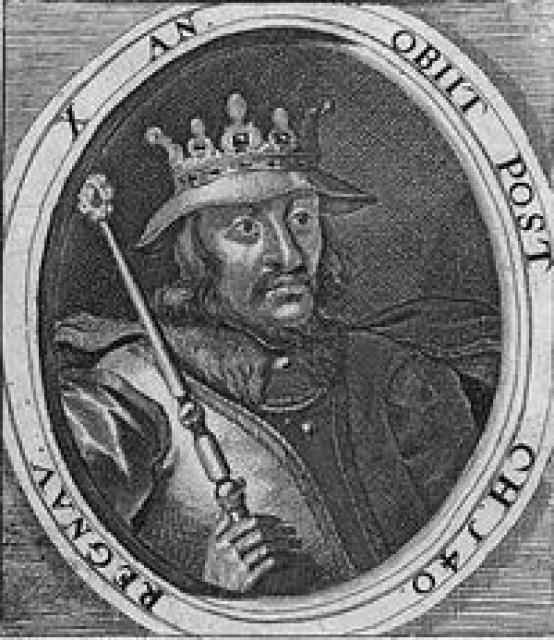
Harald II
 Great Britain
- Biography of Harold II, King of England (1066)
- An Unexpected Revelation
- The Crown of England
- Facing Multiple Wars
- The Battle of Stamford Bridge
- The Battle of Hastings
- The Final Battle
Biography of Harold II, King of England (1066)
The Rise to PowerHarold II, the Earl of Wessex, was one of the most influential nobles during the last years of King Edward III's reign. In 1065, shortly before the king's death, Harold obtained permission to travel to Normandy to visit his relatives who were held there as hostages. However, his journey proved to be arduous and dangerous. His ship was wrecked in a storm, and he miraculously survived only to become a prisoner of Count Guy of Ponthieu. Duke William of Normandy purchased Harold's freedom and treated him with utmost respect. In return, Harold joined the Normans in a campaign in Brittany.
An Unexpected Revelation
During their time together, William revealed to Harold that he had once visited the childless English King Edward the Confessor and claimed that Edward had promised him the throne. Harold, according to chroniclers, was surprised by this news, as he had never heard of Edward's intention to name the Norman duke as his heir. Nevertheless, Harold pretended to consider this move reasonable. William then directly asked Harold if he was willing to support his claim and provide assistance. In a difficult position, Harold had to promise his support and took an oath in the presence of holy relics.
The Crown of England
In January 1066, King Edward passed away. Before his death, he gathered the nobles and declared that Harold was the most worthy among them to receive the crown. The following day, after Edward's burial, the nobles and prelates elected Harold, the Earl of Wessex, as the King of England. Archbishop Stigand crowned him. During his short reign, Harold proved himself to be a just, wise, accessible, and proactive ruler who worked for the benefit of the country. He spared no effort to defend his right to the throne from external and internal enemies.
Facing Multiple Wars
Harold's older brother Tostig had been exiled from England while Edward was still alive. Tostig sought refuge with the Norwegian King Harald Hardrada and convinced him to launch an attack against Harold. At the same time, Norman emissaries arrived in England, demanding that Harold fulfill his oath. Harold argued that he had made the promise under duress and had no right to dispose of what was not his to give. In response, William announced that he would come that same year to claim what was rightfully his and pursue the oathbreaker on land and sea. Thus, Harold found himself facing two formidable wars against powerful and renowned adversaries.
The Battle of Stamford Bridge
Throughout the summer, Harold remained on the southeast coast, monitoring William's movements. The long-awaited Norman invasion caused great concern among the Anglo-Saxons. However, the Normans were delayed by unfavorable winds. Meanwhile, news arrived of a Norwegian landing in the north of England. Harold swiftly marched with his best warriors to confront them. He reached York just as the city was about to surrender to Harald Hardrada. The following day, a battle ensued, during which the Norwegian king was killed by an arrow. Tostig and most of the Norwegian leaders perished as well. Harald, the son of Harald Hardrada, made peace with the English king and sailed away with the remaining survivors.
The Battle of Hastings
Harold, wounded from the previous battle, rested in York for a few days until he learned of William's landing near Hastings. He immediately set off south, gathering forces along the way. If Harold had more time, he could have easily assembled an army of 100,000 men. However, a significant portion of the Saxons failed to join him, and in the decisive battle that would determine the fate of England, the Saxons faced four times fewer soldiers compared to the Normans. The Saxons took a defensive position on hills seven miles away from the Norman camp. Harold ordered the fortification of the position with trenches and palisades.
The Final Battle
At dawn on October 14, the Normans began their assault on the Saxon defenses. Initially, the Saxons, protected by the tall palisades, held firm and repelled all attacks. In an attempt to lure them out, the Duke ordered his troops to simulate a retreat, only to suddenly turn around and pounce on the pursuing Saxons. The Normans managed to breach the walls and poured onto the hills, leading to a bloody massacre. Trying to hold back the attackers, Harold and his two brothers fell dead at the foot of their banner.


