Harry Brearley
 Great Britain
Biography of Harry Brearley
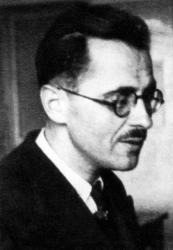
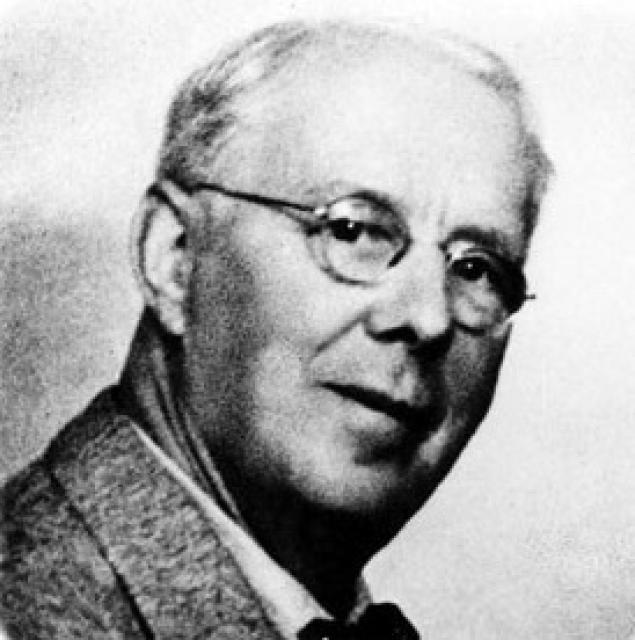
Harry Brearley was a British metallurgist and researcher, credited with inventing stainless steel. He was born on February 18, 1871, in Sheffield, a historic city in the north of England known for its steel industry. His father, John Brearley, was a steelworker, and his mother's name was Jane Senior. At the age of 12, Harry dropped out of school and started working at 'Thomas Firth & Sons', the same factory where his father worked. He eventually became the head of the chemical laboratory at the company.
By the age of 20, Brearley had gained enough experience to transition from production to laboratory work and became an apprentice there. He worked and studied at an evening school for several years, dedicating his time at home to specialize in steel production methods and chemical analysis. By the age of 30, Brearley had established himself as an experienced professional, highly skilled in solving practical industrial and metallurgical problems.
In 1901, he left 'Thomas Firth & Sons' to set up a new laboratory at 'Kayser Ellisons', but returned to 'Firth's' after two years. He spent the next three years managing the steelworks plant in Riga, Russian Empire. In 1908, two major Sheffield steel producers decided to join forces and finance collaborative laboratory research. This led to the establishment of the 'Brown Firth Research Laboratories', with Brearley as the project's head. It was there in 1912 that stainless steel was first produced. However, in 1915, Brearley left the 'Brown Firth Research Laboratories' after a controversy over the rights to the invention. The company sought full control over the rights, as Brearley was an employee of 'Firth's' when he invented stainless steel. Brearley claimed at least half of the patent rights.
Following his departure, Brearley became the manager at 'Brown Bayley's Steel Works' in Sheffield and later became the director of the company in 1925. At 'Brown Bayley', he continued to develop, refine, and produce stainless steel. In 1920, he was awarded the Bessemer Gold Medal by the Iron and Steel Institute in London.
During the challenging years before World War I, the production of weapons increased in the UK, leading to erosion and excessive wear on the inner surfaces of gun barrels. Brearley began researching new steel compositions that could withstand erosion under high temperatures and discovered that adding chromium to steel raised its melting point compared to standard carbon steels. He found that these new chrome steels were highly resistant to chemical corrosion. Brearley realized the potential of these steels not only in weapon production but also in mass manufacturing. As a result, stainless steel kitchen knives, forks, spoons, household appliances, and technical equipment were developed. Brearley conducted various tests, including exposing the steel to food acids such as vinegar and lemon juice, which yielded promising results.
In October 1895, Harry married Helen Theresa Crank, with whom he spent his entire life. He passed away on July 14, 1948, in Torquay, a coastal resort town in Devon, Southwest England. His body was cremated, and his ashes were scattered. In 2013, Sheffield University Brewery named their beer 'Brearleys' in honor of Harry Brearley and to commemorate the 100th anniversary of the invention of stainless steel.
Brearley's work on chrome steel marked the beginning of the wide range of stainless and specialty steels used in modern industries worldwide.