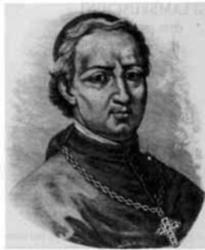
Helder Camara
 Brazil
- Early Life and Career
- Social Activism
- National Conference of Bishops of Brazil
- Second Vatican Council and the Catacomb Pact
- Archbishop of Olinda and Recife
- Spiral of Violence
- Controversies and Criticism
- Legacy
Early Life and Career
Helder Pessoa Câmara, a Brazilian Catholic bishop, was born in Fortaleza, Ceará, on February 7, 1909. His father was a financial inspector, while his mother was a schoolteacher. After graduating from a local Catholic school, Câmara entered the seminary in 1923. Ordained as a priest in 1930, Câmara initially supported the far-right Brazilian Integralist movement, a choice he later renounced.
Social Activism
In 1952, Câmara became auxiliary bishop of Rio de Janeiro. Known for his attention to the poor, he founded two social organizations: the Catholic Union of Working Women and the Labor Legion of Ceará. During his time in Rio de Janeiro, Câmara earned the nickname "Bishop of the Slums."
National Conference of Bishops of Brazil
Câmara played a significant role in the formation of the National Conference of Bishops of Brazil (CNBB) in 1952, serving as its first elected secretary for 12 years. In 1959, he established the philanthropic organization "Bank of Divine Providence" in the state of Rio de Janeiro to combat poverty and destitution.
Second Vatican Council and the Catacomb Pact
Câmara attended all four sessions of the Second Vatican Council and played a key role in drafting the Pastoral Constitution Gaudium et Spes. On November 16, 1965, he and 40 fellow bishops gathered in the Catacombs of Domitilla and signed the "Catacomb Pact," committing themselves to living in evangelical poverty and working for the poor and marginalized.
Archbishop of Olinda and Recife
From 1965 to 1984, Câmara served as archbishop of the diocese of Olinda and Recife, a period marked by military coups. As an advocate for liberation theology, Câmara denounced the military dictatorship and its human rights violations. He believed that violence could not be met with violence and argued for peaceful social change.
Spiral of Violence
Câmara's most notable written work, "Spiral of Violence," published in 1971, analyzed the cycle of oppression and violence. He urged people to "break the spiral of violence" and work for a just and equitable society.
Controversies and Criticism
Câmara faced criticism for his progressive views. He supported the possibility of divorced people remarrying within the Church and expressed understanding for those who resorted to armed struggle. However, he emphasized that violence was not his chosen path.
Legacy
Archbishop Helder Câmara died in Recife on August 27, 2000, at the age of 90. He is remembered as a tireless advocate for social justice and a symbol of Christian love and compassion. In 2015, the Vatican declared that there were no obstacles to opening the process of beatification and canonization for Helder Câmara.