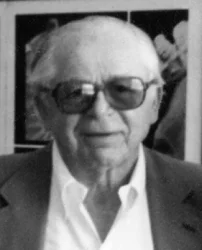
Henri Charrière
Henri Charrière became famous by turning his years as a prisoner into one of the twentieth century’s great escape narratives. Published in 1969, *Papillon* carried readers from a murder conviction in Paris to the brutal French penal colony in Guiana. The book made its author an international celebrity, but later research has challenged how much of its adventure belonged to his own life.
From Paris to the penal colony
Born in Ardèche, France, on 16 November 1906, Charrière moved to Paris as a young man and became involved in criminal circles. His nickname, “Papillon,” came from a butterfly tattoo. In 1931, he was convicted of murdering a Montmartre pimp, Roland Legrand, and sentenced to life at hard labor. Charrière maintained that he had been framed.
In 1933, he was transported to the French penal settlement in Guiana, a system notorious for harsh conditions, disease, forced labor, and brutal punishments. His experiences there supplied the raw material for his best-known book. The penal colony’s main facilities were on the mainland and nearby islands; despite the popular association of *Papillon* with Devil’s Island, the precise sites where Charrière was held and the details of his escapes have been disputed.
The making of *Papillon*
Charrière’s book describes repeated attempts to escape, life among fellow prisoners, and a final flight to freedom. Published in France in 1969, it became an international bestseller and helped bring the penal colony’s cruelty to a broad audience. A film adaptation starring Steve McQueen and Dustin Hoffman followed in 1973.
The memoir’s first-person style invited readers to take its episodes as direct testimony. Yet historians and former prisoners later pointed out that parts of the story appear to combine Charrière’s experiences with events from the lives of other convicts. Some dramatic episodes are difficult to verify, and archival records do not match the book’s chronology in every instance. The controversy does not erase the reality of the penal system, but it complicates the claim that every adventure happened exactly as Charrière described.
A new life and an enduring story
Charrière eventually escaped the penal system and settled in Venezuela, where he built a new life. He returned to France decades later, after the passage of time made his conviction no longer enforceable. He followed *Papillon* with *Banco*, a book about his life after prison, and remained closely tied to the story that had made him famous.
He died in Madrid on 29 July 1973, shortly after the film adaptation brought his tale to an even larger audience. Charrière’s fame rests on a mix of documented history and literary reinvention: *Papillon* remains a gripping account of survival, but it is best read with an awareness that memory, borrowed stories, and storytelling shaped its pages.