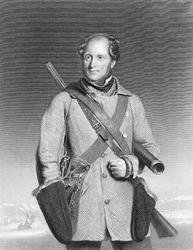
Henry Gudzon
 Great Britain
Biography of Henry Hudson
Henry Hudson (1550-1611) was an English navigator and explorer known for his voyages to the Arctic. Little is known about Hudson's early life, but it is believed that he came from a seafaring family and was well-educated in navigation. The London Muscovy Company, later known as the Russian Company, trusted him with their ships, indicating his expertise in sailing.
In 1607, Hudson set off on a voyage to find a route to India and China through the North Pole. However, he was stopped by ice between Greenland and Spitsbergen and had to turn back. Despite the setback, he set a record for the furthest north exploration at 80°23'N, which stood for 158 years.
Hudson's first expedition was for the London-based Muscovy Company in 1607. He sailed north along the eastern coast of Greenland, but encountered ice barriers and eventually reached the islands of Newland (now Spitsbergen). His journey reached a latitude of 80°N. Upon returning to England, Hudson shared his findings about the potential for whaling in the Far North, which contributed to the development of English whaling in the Spitsbergen region.
In 1608, Hudson embarked on a second journey to find a Northeast Passage to China and India. He sailed between Spitsbergen and Novaya Zemlya, attempting to find a route to the east, but was once again thwarted by ice. He then tried to find a Northwest Passage but was unable to navigate through the treacherous ice fields. Hudson's third expedition took place while he was employed by the Dutch East India Company. He set sail from Amsterdam in April 1609 on a small ship called the "Halve Maen" (Half Moon). Hudson had the choice between the Northeast and Northwest Passages and decided to explore the former. In May, he reached the Faroe Islands and continued his search for the nonexistent passage to China.
In June, when the "Halve Maen" was near Newfoundland, one of its masts snapped and fell overboard. Hudson repaired the ship in the mouth of the Kennebec River and discovered that the area was suitable for trading and abundant in cod. He made two more stops along the coast of present-day Maine and Massachusetts before sailing south and reaching the Delaware and Chesapeake Bays. However, he did not find the passage he was looking for and continued north. In September, he entered New York Bay and sailed up the river that now bears his name (Hudson River). Realizing that this route did not lead to China, he turned back. Meanwhile, French explorer Samuel de Champlain had attempted a similar voyage up the St. Lawrence River but from the opposite direction, coming within 150 kilometers of Hudson's route. Hudson's crew mutinied, and he was forced to return to England.
In 1610, the English East India Company hired Hudson for another voyage, providing him with a small ship called the "Discovery" and a crew of 23 men. Hudson's relationship with his crew was strained, and there were previous instances of mutiny during his American voyages. The company assigned an unknown sailor as the senior officer to ensure his loyalty. Hudson departed London on April 17, 1610. Dissent among the crew arose even before reaching Iceland, and Hudson struggled to maintain control. He sailed to the east coast of Greenland, then headed south in search of a passage to the Pacific Ocean. He rounded the southern tip of Greenland and turned to the west, hoping to find the Northwest Passage. On July 5, he entered the strait that now bears his name (Hudson Strait). Despite difficult conditions and ice-filled waters, Hudson continued to navigate along the northern coast of the strait, making further discoveries along the Labrador coast.
On August 2, land appeared at 63°20'N, which Hudson initially mistook for part of the mainland. The following day, the ship circumnavigated the presumed landmass, revealing a wide expanse of ice-free, calm waters to the west. On August 3, 1610, Hudson made his final entry in the ship's log: "We went (west) through a narrow passage between Digges Island and Labrador. I named the cape at the entrance from the south Wolstenholme." After this entry, the rest of the account was completed by Abacuk Prickett, a sailor on the "Discovery." The crew sailed for several weeks along the coast, and although they believed they had found the passage to the Pacific Ocean, they were actually navigating a chain of islands off the Labrador coast, including Mansel, Ottawa, Two Brothers, Sleeper, King George, and Belcher islands.
Hudson's fate remains unknown, as he and his crew were never heard from again. His contributions to exploration and his quest for a Northwest Passage left a lasting impact on maritime history.