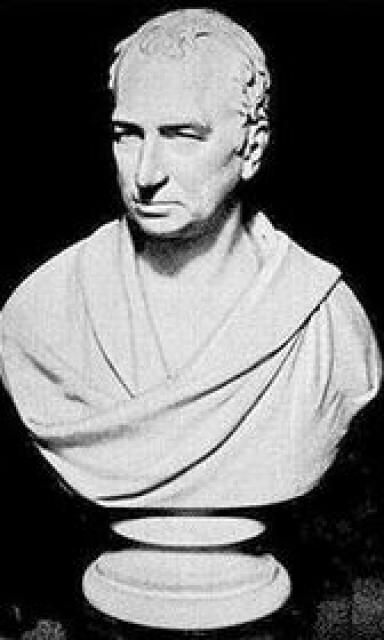
Henry Thomas Colebrooke
 Great Britain
- Early Life and Education
- Early Career in India
- Pursuits in Sports and Sanskrit
- Judge and Professor
- Contributions to Indology
- Return to England and Scientific Accomplishments
Early Life and Education
Henry Colebrooke was born in London, the third son of Sir George Colebrooke, the second baronet. He received a homeschool education and made significant progress in classical sciences and mathematics by the age of fifteen. From twelve to sixteen years old, he resided in France.
Early Career in India
In 1782, Colebrooke was appointed as a clerk in India. A year after his arrival, he was transferred to the revenue department in Calcutta, and three years later, he moved to the revenue department in Tirhut. In 1789, he relocated to Purnea, where he studied the resources of that part of India and published his "Remarks on the Agriculture and Commerce of Bengal," which advocated for free trade between Britain and India.
Pursuits in Sports and Sanskrit
During his time in Tirhut and Purnea, Colebrooke developed a keen interest in sports. After eleven years in India, he began studying Sanskrit and was entrusted with the translation of the great "Digest of Hindu Laws," a monumental study of Hindu law that had been left incomplete by Sir William Jones. He translated two treatises, Vijnaneshwara's "Mitakshara" and Jimutavahana's "Dayabhaga," under the title "Law of Inheritance."
Judge and Professor
In 1799, Colebrooke was sent on a special mission to Nagpur and upon his return was appointed as a judge in the newly created appellate court, which he later headed. In 1805, he was appointed as Professor of Sanskrit and Hindu Law at Fort William College by Lord Richard Wellesley.
Contributions to Indology
During his stay in Calcutta, Colebrooke authored "A Sanskrit Grammar" (1805), several works on Hindu religious ceremonies, and his "Essay on the Vedas" (1805), which became the standard work on the subject in England for many years. He became a member of the Supreme Council in Fort William in 1807 and returned to England seven years later.
Return to England and Scientific Accomplishments
In 1822, Colebrooke was elected as the second President of the Royal Astronomical Society. He served as Director of the Royal Asiatic Society, and many valuable papers in the Society's "Transactions" are attributed to him.


