Hephaestion
- A companion at Alexander’s side
- An officer in a changing empire
- A loss that shook the king
- Remembered beyond the battlefield
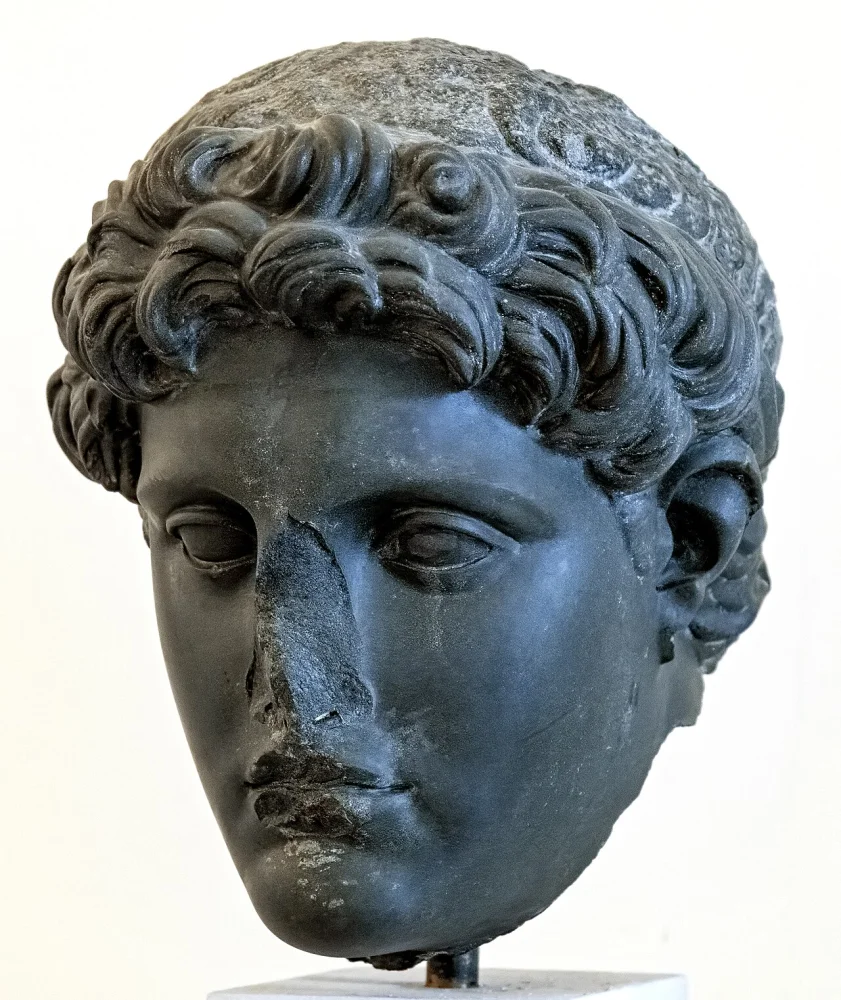
Hephaestion occupied an unusual place in Alexander the Great’s court: he was a trusted general, a Macedonian noble, and the king’s closest companion. He accompanied Alexander on the conquest of the Persian Empire and was entrusted with military and diplomatic responsibilities as the campaign moved farther east. His sudden death in 324 BCE devastated Alexander, who honored him with a state funeral on a scale rarely granted to anyone outside a royal family.
A companion at Alexander’s side
Hephaestion was the son of Amyntor and came from the Macedonian aristocracy. The details of his early life are scarce, and later writers often place him beside Alexander from their youth. He appears in the historical record during the expedition to Asia, where he became a member of the king’s inner circle. Ancient historians portray him as the companion to whom Alexander confided and whose advice carried special weight.
In 330 BCE, after the fall of the Persian court and the execution of Philotas, Hephaestion shared command of the Companion cavalry with Cleitus the Black. Over the following years Alexander relied on him for more than battlefield leadership. He led diplomatic missions, helped arrange the movement of troops and supplies, and took part in the creation of new settlements that were meant to connect distant parts of the empire.
An officer in a changing empire
Hephaestion supported Alexander’s efforts to incorporate Persian officials and customs into the new imperial order. This policy brought the Macedonian court into conflict with officers who wished to preserve older divisions between conquerors and conquered. Hephaestion’s loyalty to the king’s direction made him an important figure at a moment when Alexander was trying to govern a diverse and expanding realm.
At the mass weddings in Susa in 324 BCE, Hephaestion married Drypetis, a daughter of the Persian king Darius III. Alexander married her sister Stateira. The marriages symbolized the court’s attempt to bind Macedonian and Persian elites together, though that political program remained controversial among many of the troops and nobles.
A loss that shook the king
Later in 324 BCE, Hephaestion fell ill and died at Ecbatana, in present-day Iran. The surviving accounts differ in their details, but they agree that Alexander’s grief was profound. He ordered a lavish funeral at Babylon, directed public mourning, and sought divine honors for his dead companion. He also kept Hephaestion’s name attached to the cavalry command he had led, ensuring that his memory remained part of the army’s identity.
The closeness of the two men has inspired enduring debate. Ancient sources describe an exceptional personal bond, and some modern writers interpret it as romantic, though the surviving evidence does not allow a definitive conclusion about the private nature of their relationship. Their connection was also political: Hephaestion’s trust and proximity to the king gave him unusual influence in an empire built through rapid conquest.
Remembered beyond the battlefield
Hephaestion died less than a year before Alexander himself. His career is difficult to reconstruct independently because most surviving accounts focus on his place beside the king. Yet his commands, diplomatic work, and role in the Persian integration policy show that he was more than a celebrated favorite. He was one of the most important members of Alexander’s inner circle, and the extraordinary mourning at his death reflects how deeply the king and the army felt his absence.