Hermann Hoth
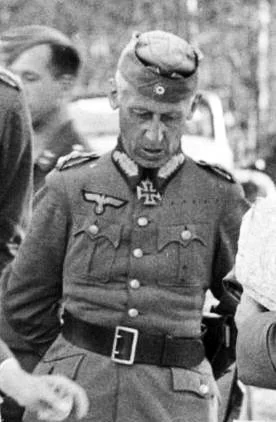
Hermann Hoth was a senior German army officer whose career reached its height during the Second World War. Born on April 12, 1885, in Neuruppin, Prussia, he served in the First World War and remained in the military after Germany’s defeat. He later commanded major armored formations in the Nazi invasion of the Soviet Union, and after the war an American military tribunal convicted him of war crimes and crimes against humanity.
A Career in the German Army
Hoth entered the Prussian army as a young man and served as an officer in the First World War. He continued in the Reichswehr, Germany’s restricted postwar military, and rose through the ranks as the country rearmed under the Nazi regime. During the invasions of Poland and France, he commanded armored units and became known as an advocate of mobile warfare.
In June 1941, Hoth led Panzer Group 3 in Operation Barbarossa, the German invasion of the Soviet Union. His forces advanced through Belarus, taking Minsk and Vitebsk. He later commanded the 17th Army in Ukraine and, from May 1942, the 4th Panzer Army. In December of that year, he led an unsuccessful attempt to break through to the German Sixth Army, trapped at Stalingrad. His forces also fought in the 1943 campaigns around Kharkiv and Kursk. After the Red Army retook Kyiv, Hoth was removed from command in December 1943.
Criminal Orders and Command Responsibility
Hoth’s record cannot be separated from the criminal policies of the German war in the East. Before the invasion, he received the Commissar Order, which directed German forces to execute captured Soviet political commissars in violation of the laws of war. Evidence at his trial showed that the order was passed to units under his command and that he lectured subordinate officers on its implementation. In November 1941, as commander of the 17th Army, he also issued a directive that used antisemitic language and urged troops to suppress what it called “Jewish-Bolshevik” resistance.
Hoth argued after the war that he had limited the application of some orders. The tribunal nevertheless found him responsible for crimes carried out by troops under his command, including the execution of political commissars and the mistreatment of prisoners of war and civilians. Command authority carried legal responsibility, the judgment held, especially when criminal orders were transmitted and enforced.
Trial and Later Life
In the High Command Trial at Nuremberg, Hoth was convicted in 1948 and sentenced to 15 years in prison. He was released on parole in 1954. Like several former officers, he later wrote about German armored operations; his book “Panzer-Operationen” appeared in 1956. He died in Goslar on January 26, 1971.
Hoth’s military career is sometimes summarized through operational successes and the doctrine of mobile warfare. His biography also records the Nazi army’s participation in an illegal war of annihilation and the responsibility of senior commanders for its crimes. The verdict against him makes clear that command was not merely a matter of battlefield maneuver: it carried accountability for the orders issued and the treatment of people under military control.