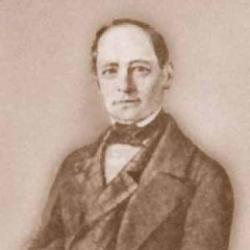
Hermann Weyl
 Germany
Biography of Herman Weyl
Early Life and Education
Herman Weyl was a German mathematician who was born on November 9, 1885. He completed his studies at the University of Göttingen in 1908, where he became a student of David Hilbert, a renowned mathematician.

Academic Career
From 1913 to 1930, Weyl served as a professor at the Zurich Polytechnic Institute. During this time, he made significant contributions to the fields of trigonometric series and series of orthogonal functions, complex variable theory, and differential and integral equations. He introduced the concept of "Weyl sums" in number theory.
In 1930, Weyl moved to become a professor at the University of Göttingen. However, in 1933, after the Nazis came to power, he was forced to leave Germany due to his Jewish heritage. He emigrated to the United States and joined the Institute for Advanced Study in Princeton, where he worked until his retirement.
Contributions and Impact
Weyl's most notable works were in the areas of algebra, particularly in the theory of continuous groups and their representations, and complex variable theory. His book "Die Idee der Riemannschen Fläche" published in 1913 became a classic and provided a rigorous definition of Riemann surfaces that could be applied to any manifold.
Weyl's works in applied linear algebra were influential in the development of mathematical programming. His contributions to mathematical logic and the foundations of mathematics are still of interest today, as he was a proponent of intuitionism.
His research in mathematical physics was also significant. Shortly after the creation of Albert Einstein's general theory of relativity, Weyl began working on a unified theory of fields. Although he was unable to combine gravity and electromagnetism, his theory of gauge invariance has become of immense importance in modern physics. Weyl also applied group theory to quantum mechanics, further expanding his impact in the field.
Legacy
Herman Weyl's contributions to mathematics and physics have had a lasting impact on these fields. His works continue to be studied and are fundamental to various branches of mathematics and theoretical physics. Weyl's innovative ideas and rigorous approach to mathematical concepts have solidified his place as one of the greatest mathematicians of the 20th century.