
Hidehiko Yamane
 Japan
Japan- Biography of Hidehiko Yamane
- A Passion for Fishing
- The Birth of EVISU
- The Early Years
- A Global Phenomenon
- The Journey to Success
- A Diverse Collection
- A New Era
- Tax Evasion Scandal
Biography of Hidehiko Yamane
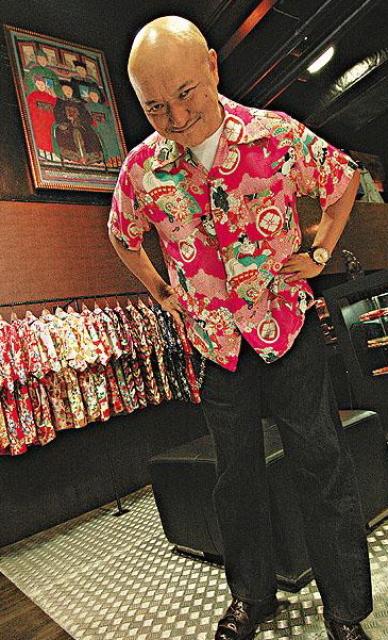
Hidehiko Yamane is a Japanese designer, founder, and owner of the company 'EVISU', which produces denim clothing for men and women. The 'EVISU' products are sold in department stores across Japan, China, UK, Hong Kong, Malaysia, Singapore, and Thailand.

A Passion for Fishing
Yamane is an avid fisherman and has even appeared in television programs dedicated to fishing on a Japanese channel. His company is named after a Japanese deity called Ebisu, one of the seven gods of luck and prosperity and a patron of fishing and hard work. Ebisu is often depicted with a fish and fishing rod. Aside from money and fishing, Yamane's other three favorite things in the world are women, beer, and golf, in no particular order.

The Birth of EVISU
For over twenty years, this unique denim brand has introduced fashion enthusiasts worldwide to high-quality Japanese denim. The uniqueness of EVISU jeans lies in the combination of traditional vintage details, numerous manual operations, and a distinctive style that has remained on the cutting edge of fashion for three decades. EVISU played a key role in the history of modern denim, as the creation of the brand marked the beginning of the Japanese 'Replica Movement', which brought together hundreds of brands.
The Early Years
EVISU was founded in 1991 in Osaka. Initially, it was a small production that made no more than 14 pairs of jeans per day. Each pair was manually adorned with a famous logo representing a stylized seagull. Today, EVISU has gained recognition as one of those denim brands that must be in the wardrobe of denim lovers from various age, cultural, and social groups. Collectors and hipsters alike eagerly purchase their jeans.
A Global Phenomenon
EVISU captured the imagination of Japanese youth and sparked a revival of interest in vintage denim, which has since spread worldwide. For its creator and inspirer Hidehiko Yamane, EVISU initially represented his beloved craft rather than a commercial enterprise whose only goal is to generate profits. Despite its phenomenal commercial success, EVISU's goal remains unchanged. The most important thing for the company and its employees is to create high-quality products that will delight their owners for many years. This is the fundamental principle of EVISU's existence and the reason it has become an icon in denim fashion.
The Journey to Success
The idea that led to the birth of EVISU jeans was to reproduce the perfect pair of vintage jeans, an endeavor that took Yamane several years. Yamane trained as a tailor, but his love for vintage jeans and disappointment with modern mass-market options led him into the vintage clothing trade and eventually to the creation and sale of retro-style jeans. It should be noted that sewing vintage pants is not an easy task, especially considering that the machines needed for their production had not been manufactured for forty years. However, Yamane managed to acquire them from all over the country, sometimes piecing them together from individual parts.
A Diverse Collection
In the early 90s, Yamane introduced a line of men's denim clothing, followed by collections for fishermen and golfers. In 1999, a women's clothing line named 'Evisu Donna' joined the brand, and EVISU, going beyond the traditional boundaries of denim brands, transformed into a full-fledged fashion company and a pioneer of new trends. Currently, EVISU has 65 stores in Japan alone.
A New Era
In 2009, the company underwent a major overhaul, and Scott Morrison, one of the founders of 'Paper Denim & Cloth' and 'Earnest Sewn', joined the team as the general and creative director.
Tax Evasion Scandal
In March 2006, the Tokyo District Public Prosecutors Office suspected Yamane of tax evasion. He and a couple of other businessmen were accused of concealing over 500 million yen in income and failing to pay around 160 million yen in taxes over a period of three years.


