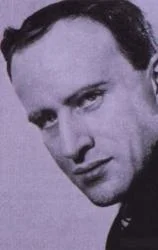
Hugh Kelly
- Early life and move to London
- Journalism, satire and the stage
- Political controversy and later plays
- Final years and legacy
Hugh Kelly rose from an apprenticeship in Dublin to become a successful London playwright, journalist and pamphleteer. His sentimental comedy False Delicacy was a hit at Drury Lane in 1768 and set him in direct competition with fellow Irish writer Oliver Goldsmith. Kelly’s career was brief and turbulent: political controversy disrupted another play, his reputation suffered, and he eventually left theatre to train as a barrister.
Early life and move to London
Kelly was born in 1739 in Killarney, County Kerry. His father, Ferdinand Kelly, had lost the family estate and later moved to Dublin, where he bought a tavern. Hugh received little formal education and was apprenticed to a stay-maker, a craft that involved making corsets and other fitted garments.
In 1760, Kelly moved to London. He first worked in his trade and then as a clerk before turning to journalism. He edited several publications, including the Court Magazine, the Ladies’ Museum and the Public Ledger. He also wrote political pamphlets, at times defending the policies of William Pitt the Elder, and earned a living through commissioned political writing.
Journalism, satire and the stage
Kelly’s literary reputation began to form through sharp, often personal writing. In 1766, he published Thespis, a satirical poem that mocked many performers at the Drury Lane theatre while sparing actor-manager David Garrick, whose support he hoped to win. He later revised the poem to soften its harshest attacks. He also wrote theatrical criticism and published essays under the title The Babbler, as well as the novel Louisa Mildmay.
Garrick helped Kelly bring his first play, False Delicacy, to the stage at Drury Lane in 1768. The sentimental comedy was a commercial success, despite its cool reception from Samuel Johnson, who dismissed its characters as lacking individuality. Its popularity also brought Kelly into a rivalry with Oliver Goldsmith, whose comedy The Good-Natur’d Man opened at Covent Garden only days later. The two writers had previously been on friendly terms, but the competing productions strained their relationship.
Political controversy and later plays
Kelly’s next comedy, A Word to the Wise (1770), became entangled in politics. Audiences suspected that he was being paid to support the government, and hostile spectators disrupted the opening and later performances. The play was withdrawn. Kelly continued writing for the stage, but later works had less success. These included the tragedy Clementina, The School for Wives and The Romance of an Hour. His final play, The Man of Reason, appeared in 1776 and was poorly received.
The controversies around his public writing and theatre career pushed Kelly toward the law. He entered Middle Temple in 1768 and was called to the bar in 1773. He tried to establish a practice at the Old Bailey and Middlesex Sessions, but did not achieve lasting professional success.
Final years and legacy
Kelly married Elizabeth, a seamstress, in 1761, and the couple had at least five children. His death left the family in financial difficulty, and a benefit performance was arranged for his widow and children in 1777. Kelly died in London on February 3 of that year, aged 37.
His place in eighteenth-century literary history rests chiefly on False Delicacy, a play whose commercial success brought an Irish writer to the center of London theatre and placed him in competition with Goldsmith. His career also shows the precarious world of the period’s professional writers, who often combined journalism, political writing and drama while depending on publishers, patrons and the unpredictable response of theatre audiences.