Ibrahim Al-kuni
 Libya
Libya- Early Life and Education
- Career in Libya and Moscow
- Exile and Recognition in Poland and Switzerland
- Literary Style and Themes
Early Life and Education
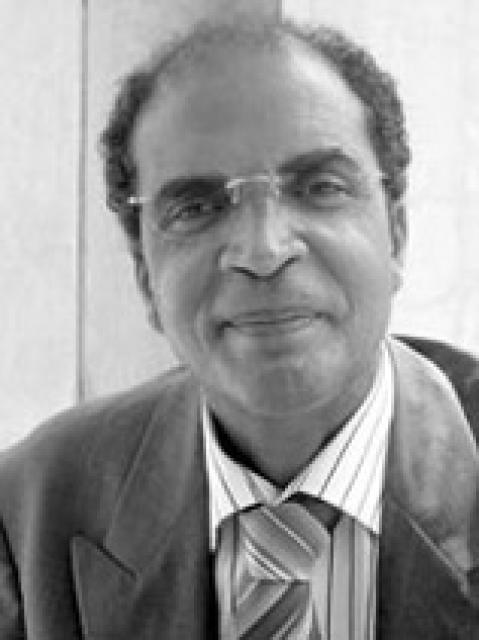
Born in 1948 in Ghadames, Libya, Ibrahim al-Koni is a contemporary Libyan author, novelist, and journalist. Of Tuareg descent, al-Koni learned Arabic at the age of 12 and has traveled extensively throughout Libya since then.
Career in Libya and Moscow
Following Muammar Gaddafi's rise to power and the advent of oil wealth, al-Koni began writing articles at the age of 26 in 1974. He has published extensively on socialism and nationalism in postcolonial Libya. He also worked for the Ministry of Social Affairs, the Ministry of Culture, and the Libyan News Agency (J.A.N.A.), as well as in the Libyan embassies in Russia and Poland.
In 1977, al-Koni graduated from Moscow's Gorky Literary Institute, where he studied Russian language, Marxism, and comparative literature. Along with mandatory "socialist realism" literature, he was introduced to works by Dostoevsky, Tolstoy, Sholokhov, Bakhtin, Solzhenitsyn, and Chekhov. He worked as a journalist and later as an official at the Libyan Cultural Center.
Exile and Recognition in Poland and Switzerland
After the collapse of the Soviet Union, al-Koni moved to Poland, where he worked as a correspondent for the Libyan News Agency and the Libyan Cultural Center. He was also a member of the Society for Libyan-Polish Friendship and editor of the magazine "Polish Commonwealth." He translated and published Arabic-language stories, including his own. He resided in Poland until 1994.
Since 1994, al-Koni has lived in Goldwil, Switzerland. There, he met the Arabist Hartmut Fendrich, who subsequently translated many of his works. Al-Koni's writing gained international recognition, earning him numerous literary awards, including the Swiss Grand State Prize (1995), the Libyan State Prize for Literature and Arts (1996), the Franco-Arab Friendship Society Award (2002), the Muhammed Zefzaf Prize (2005), and the Sheikh Zayed Prize (2008).
Literary Style and Themes
Al-Koni is the author of over 60 books, including novels, short stories, and non-fiction works exploring the life of Tuareg people in the Sahara. The desert serves as a central image in his writing, through which he investigates themes of nature and humanity, time and spirit. His prose is rich with allegory and aphorisms, Tuareg names, descriptions of rituals, pre-Islamic traditions, and Sufism.
His novels include "A Grain of Gold" (1990), which explores the relationship between a tribal chieftain's son and his camel; "The Seven Veils of Seth" (1993), which draws on ancient Egyptian mythology; "The Dreams of the Djinns" (1997), which investigates human struggles in the desert; "The Bleeding Stone" (2000), which examines the destruction of the desert by outsiders; and "A Sip of Blood" (2004), which celebrates the liberation of Tuareg people.
Al-Koni's writing has earned him international acclaim and has been translated into numerous languages. He is considered one of the most important contemporary Arab writers, and his works continue to be studied and appreciated for their unique insights into the human experience.