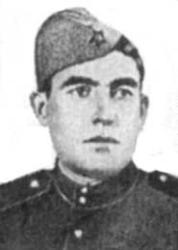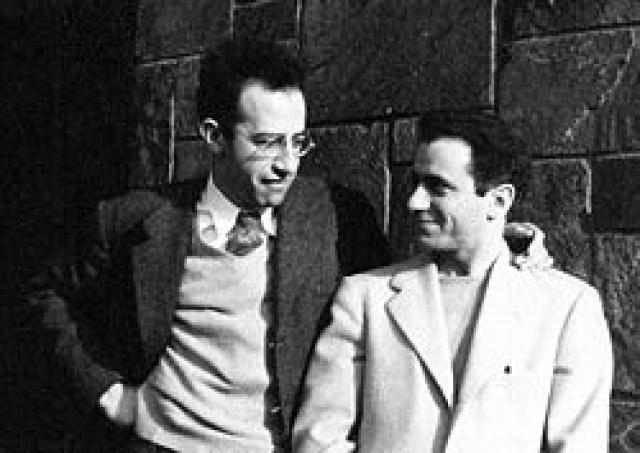
Iosif Berg
 USA
USABiography of Joseph Berg
Joseph Berg was an American-Soviet radio engineer and spy. He was born in New York City into a Jewish family of Ukrainian immigrants. Berg graduated from the City College of New York with a degree in electrical engineering. During his studies, he joined the Communist Youth League.
During World War II, starting from July 1940, Berg worked in the laboratories of the U.S. Army Signal Corps, alongside his friend Alfred Sarant. In February 1942, Berg was dismissed from the army laboratories after his connections with communists were discovered. However, he soon found employment with Western Electric, a company fulfilling military contracts.
In contact with Soviet intelligence officer Feklisov, Berg and Sarant provided technical information about American weapons to the Soviet Union, including radar installations, aircraft sights, analog computers for fire control, and other systems. A significant portion of the information they transmitted reached engineer-admiral Axel Berg, who headed the program for creating Soviet radars.
After the war, Berg and Sarant founded Sarant Laboratories, seeking military contracts. However, the company went bankrupt shortly thereafter. Their paths diverged for some time. In 1947, Berg worked for Sperry Gyroscope but was fired in 1948 for joining the Communist Party of the United States. In 1949, Berg went to Paris, where he studied musical composition and piano.
In 1950, Berg attended the trial of Julius and Ethel Rosenberg, whom he knew, and fled to Czechoslovakia. There, he adopted the new name Joseph Berg. In the summer of 1951, Berg reunited with Sarant, who had changed his name to Philip Staros, and they worked together. In Prague, Berg married a Czech woman and worked in a laboratory developing air defense systems.
In 1956, Berg and Staros went to the Soviet Union, where they played a significant role in the development of Soviet microelectronics. Staros became the head of Laboratory SL-11 in Leningrad, which was later transformed into KB-2. They created the first desktop computer in the Soviet Union, the UM-1, and its modification, the UM-1NH, for which they received the State Prize. In 1962, KB-2 was visited by Nikita Khrushchev, who was greatly impressed by their work.
Berg and Staros played a major role in the creation of the Institute of Semiconductor Electronics (NII-35) and the construction of the city of Zelenograd. After the dissolution of the Soviet Union, Berg visited the United States multiple times, where he denied his involvement in espionage. He passed away in 1998.