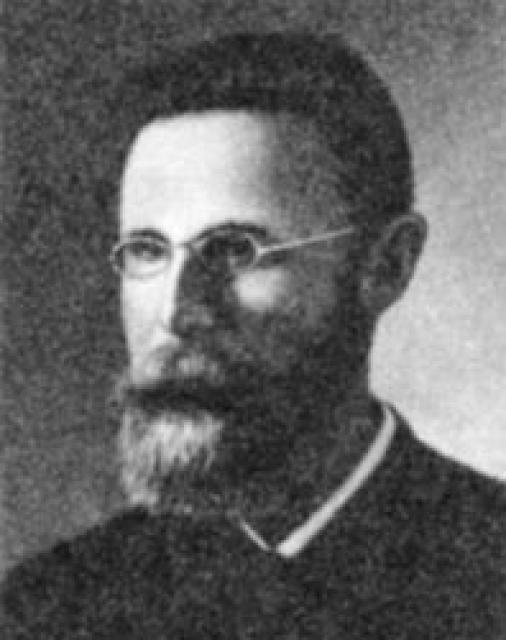
Iosif Cablitz (Yuzov)
 Russia
- Early Life and Education
- Involvement in Student Activism and "Going to the People"
- Literary Debut and Advocacy for Populism
- "Foundations of Populism" and Criticism of the Intelligentsia
- Later Years and Legacy
Early Life and Education
Dmitri Nikolaevich Kablitz, better known by his pen name Yuzov, was born in 1848 into a noble family in the Kovno Governorate. As a Lutheran, he received his education at the Kiev Gymnasium and Kiev University, but did not complete his course.
Involvement in Student Activism and "Going to the People"
Kablitz's student years were marked by his involvement in the political unrest of the late 1860s and early 1870s. He became a staunch advocate of populism, a socio-political movement that opposed both liberalism and bureaucracy. Inspired by these ideals, he participated in the "going to the people" movement, working as a rural laborer in various parts of Russia. During this time, he adopted aliases and lived a life of adventure and danger.
Literary Debut and Advocacy for Populism
In the late 1870s, Kablitz made his literary debut under the pseudonym Yuzov. He gained attention through his articles in the newspaper "Nedelya," where he passionately advocated for populist ideas. His most notable work was "Mind and Feeling as Factors of Progress," which attempted to provide a theoretical foundation for populism.
In 1881, Kablitz published his essays on "Russian Dissenters," which explored the religious and cultural rift between the people and the state. He argued that this division was a manifestation of the people's resistance to foreign influences and their desire for social justice.
"Foundations of Populism" and Criticism of the Intelligentsia
Kablitz's major work, "Foundations of Populism," was published in 1882. In this treatise, he challenged the notion that the intelligentsia had the right to "impose" their ideas on the people. Instead, he maintained that the people's intuitive sense of justice and equality should guide social change.
Later Years and Legacy
After the publication of "Foundations of Populism," Kablitz was able to resume using his real name. His former political activities were largely forgotten, as his literary work was seen as non-threatening. He continued to write and revised his works, including a second volume of "Foundations of Populism" (1893).
Kablitz's writings, while flawed in their lack of systematic structure and one-sidedness, are a valuable contribution to the understanding of populism and the intellectual climate of the 1870s. He died on August 4, 1893, leaving behind a legacy as a dedicated advocate for the people's rights and a proponent of social change based on their values.



