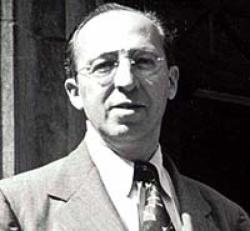
Ira D. Sankey
 USA
USABiography of Ira David Sankey
Ira David Sankey was an American gospel singer and composer, known for his collaboration with renowned evangelist and preacher Dwight Lyman Moody. He earned the nickname "The Sweet Singer of Methodism." Sankey was born on August 28, 1840, in Edinburgh, on the outskirts of New Castle, Pennsylvania. He was the son of David Sankey, also known as the "father of Lawrence County" on the western border of Pennsylvania, and his wife Mary Leeper Sankey.
At the age of 16, Sankey experienced a religious conversion at a revival meeting held at King's Chapel United Methodist Church, located about three miles from his home. In his youth, Sankey participated in the Civil War and later worked for the government in the Internal Revenue Service. He also became an active member of the Young Men's Christian Association (YMCA).
Sankey quickly gained fame as a gospel performer and caught the attention of preacher Dwight L. Moody. They first met in June 1870 at a YMCA convention in Indianapolis, Indiana and a few months later, Sankey participated in his first evangelistic meeting with Moody. Shortly after, he left his government position to focus on his musical career.
In September 1863, Sankey married Fanny V. Edwards, one of the members of his choir, and they had three sons together. In October 1871, Sankey and Moody were in Chicago conducting one of their spiritual revival meetings when the Great Chicago Fire broke out. They both narrowly escaped death, and Sankey watched the burning city from a boat on Lake Michigan.
In June 1872, Sankey and Moody embarked on their first joint trip to the United Kingdom. Even long after this, hymns written by Sankey were promoted by the famous London Baptist preacher of that time, Charles Spurgeon. In Edinburgh, they raised £10,000 for the construction of a new building for the Carrubbers Close Mission church, which still stands and is used for its original purpose.
Sankey wrote several hymns and songs, composed and arranged music, and released a popular collection containing over 1,200 religious songs that are still used today. From 1895 to 1908, he served as the president of the publishing company 'Biglow and Main'. In the last five years of his life, he was blind due to glaucoma and found a kindred spirit in Fanny Crosby, a blind poetess, composer, accompanist, and his close friend.
"The Ninety and Nine"
His first and most famous composition was the hymn "The Ninety and Nine," which has an interesting history. In May 1874, while Sankey and Moody were traveling through Scotland from Glasgow to Edinburgh, the singer bought a newspaper before boarding the train. In the newspaper, he found nothing interesting except a sermon by Henry W. Beecher and a small poem in the corner of the page. Sankey liked the poem so much that he cut it out and put it in his pocket.
A few days later, during a church service, the pastor asked him to sing the closing song. Inspired, Sankey pulled out the newspaper clipping and improvised, singing a new hymn that moved his listeners to tears as he accompanied himself on the organ. The verses were written by Elizabeth Clephane in 1868, a year before her death. "The Ninety and Nine" became Sankey's most famous melody and his most successful commercial song.
Sankey passed away on August 13, 1908, in Brooklyn, New York. In 1979-1980, the Gospel Music Association recognized his achievements and immortalized his name in the Gospel Music Hall of Fame.