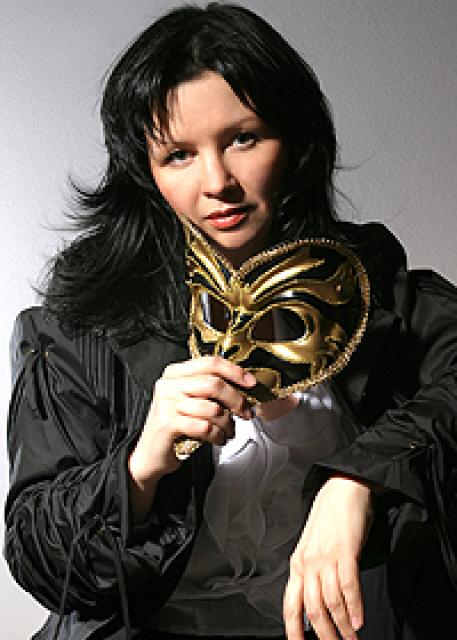
Irina Shvedova
 Russia
- Biography of Irina Shvedova
- Early Talents and Career
- Success and Challenges
- Continued Career and Current Endeavors
Biography of Irina Shvedova
Irina Shvedova, a Soviet singer, belongs to the rare type of singers who do not value a flashy stage image, sexual allure, or even impeccable vocal technique. Shvedova's songs are dramatic monologues, and their performance stirs the souls of generations of listeners. Irina Igorevna Shvedova, the daughter of opera singer Vasily Tretiak and actress Ludmila Tomashevskaya, was born on April 28, 1959, in Kishinev, and soon after, her family moved to Kiev. Her parents divorced early, and she took the surname of her adoptive father, a People's Artist of Ukraine, whom she loved dearly.
Early Talents and Career
Coming from an artistic family, Irina displayed her diverse talents at a young age. She seriously studied music, classical dance, painting, and attended classes at the Young Announcers Studio at the Ukrainian Radio, where she participated in the recording of the children's musical play "Toothbrush Queen" in 1969. In this play, Irina Shvedova played the lead role of Masha accompanied by the Estrada-Symphonic Orchestra of Radio and Television. Even during her music school education, Irina Shvedova composed several songs, three of which were recorded on Ukrainian radio in 1977.
In 1974, she began studying ballroom dancing, participating in international competitions in Class A. It was there that she met her first husband, Oleg Kalishenko. Irina started her independent life immediately after finishing school. She worked as a secretary and a concertmaster, led children's clubs, sang with Ilya Gass's orchestra, and continued her education. In 1978, she received a red diploma from the Faculty of Ethics and Aesthetics at the Kiev Institute of Marxism-Leninism. A year after the birth of her daughter Nadezhda, she enrolled in the Karpenko-Kary Theater Institute in Kiev in 1979.
Success and Challenges
Following her divorce from her first husband, Irina worked in the Youth Theater, pursued teaching, and entered into a creative and personal partnership with composer Igor Demarin. After a successful performance at the Ukrainian Variety Artists Competition in 1986, she met Yuri Bogatikov, which marked the beginning of her successful career as a soloist and touring artist throughout the country.
The turning point for Irina Shvedova came in 1990 when she and Igor Demarin went to conquer Moscow by participating in the "Song of the Year" competition. Success was not long in coming - the song "White Waltz" stirred up the whole of Russia and earned the popular nickname "Afghan Waltz." Equally grandiose success accompanied the song "America, the Separatist," which won the Grand Prix at the St. Petersburg "Hit of the Year" competition. Unfortunately, the success of the new hits created with Demarin, such as "Leaves of the Summer Garden," did not last long. In 1995, television broadcasts became paid, making it difficult for Shvedova's songs to break through the commercial repertoire flooding the screens. Around the same time, her partnership with Igor Demarin ended with their separation. One of the derogatory epithets he used to describe his ex-wife was scornfully calling her a "singing actress."
Continued Career and Current Endeavors
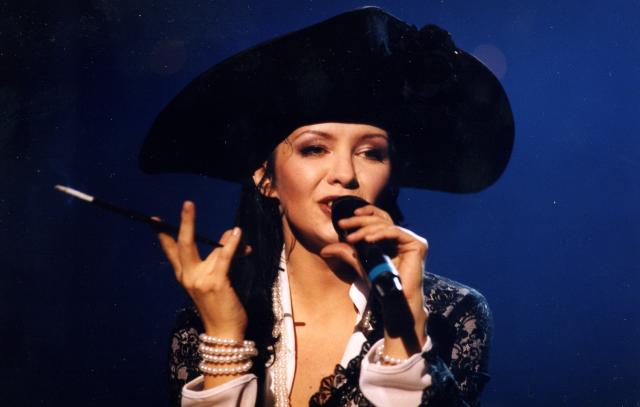
Irina Shvedova does not hide her artistic talent, which she largely credits for the success of her songs. She has her own unique expression, which includes primarily black stage attire and a dramatic performance style. The singer frequently tours in Russia and abroad, serves on the jury of creative competitions, and works with young actors in the city of Podolsk, where she currently resides. Recently, her new program "Seeing Paris" triumphantly premiered at the House of Russian Abroad.


