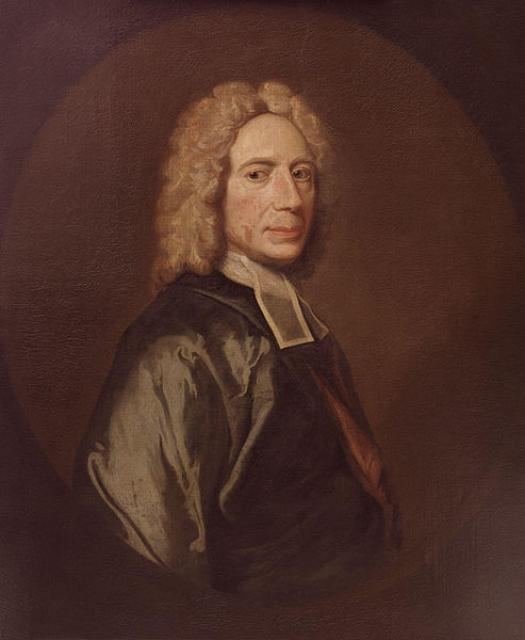
Isaak Watt
 Great Britain
Biography of Isaac Watts
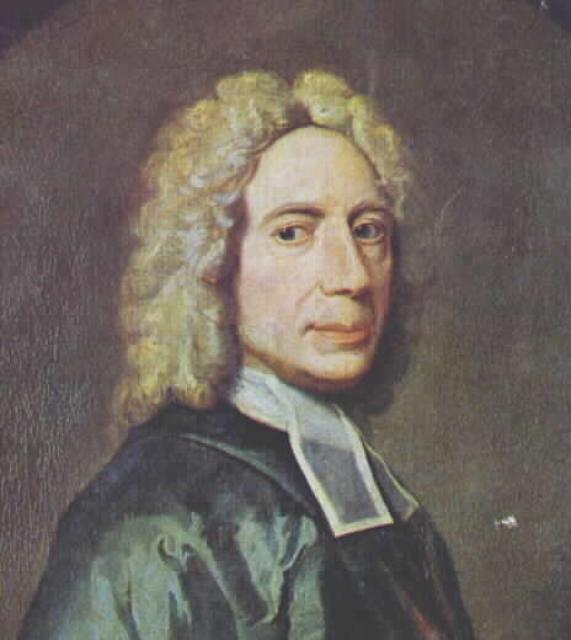
Isaac Watts, born on July 17, 1674, in Southampton, England, was a renowned author of the English hymn. He is credited with the authorship of around 750 hymns, many of which are still popular and have been translated into multiple languages. Despite his unappealing appearance, Watts' spiritual verses resonated with many people with sincere hearts. Even the church, initially dismissing his collection of verses as "Watts' Whims," later included his hymns in their worship services.
Early Life and Education
Isaac Watts grew up among nonconformists, as his father, also named Isaac Watts, faced disfavor twice due to his convictions. As a young boy, Watts attended the independent King Edward VI School, where he learned Latin, Greek, and Hebrew. He discovered his inclination for rhyme, often expressing himself through poetry to explain his mischiefs or react to events, unconsciously encouraged by his parents.
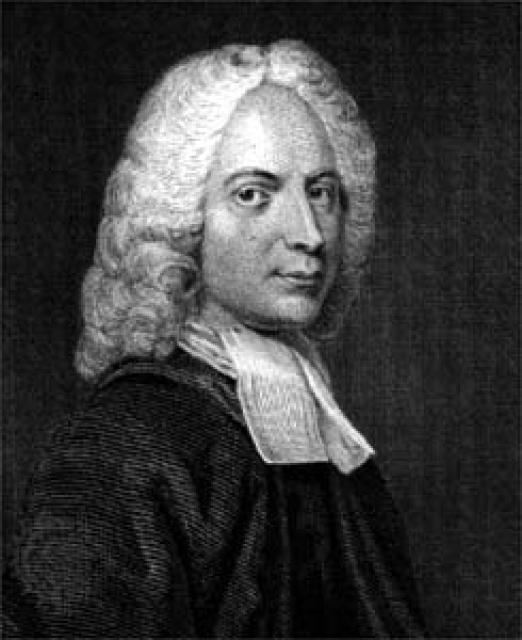
Unable to attend Oxford or Cambridge due to his refusal to accept the teachings and rituals of the Anglican Church, Watts enrolled in the Dissenting Academy at Stoke Newington in 1690. His education led him to pastoral work in London, where he also assisted aspiring preachers despite his perpetually poor health.
The Life of Isaac Watts
Accepting a position as a private tutor, Isaac lived with the Hartopp family in Stoke Newington before residing with Sir Thomas Abney, the Lord Mayor of London, and Lady Mary Abney in Hertfordshire. Watts propagated religious beliefs that had a more secular and ecumenical character, distinct from the prevailing nonconformism. He was more interested in the development of education and science rather than the spread of teachings from a specific denomination. In matters of theology, Watts often went beyond the boundaries of orthodox doctrines. In 1719, he opposed the doctrine of the Trinity, asserting that the personality of the Holy Spirit is symbolic rather than literal.
Following Sir Thomas' death, Lady Mary became the first female hostess of the estate where Isaac had resided for a long time as a guest. The beautiful surroundings of Abney Park became the author's permanent residence from 1736 until his death in 1748. Stephen Marini, a researcher of spiritual music, described how Watts contributed to the spread of English hymnody. Traditional poetic traditions were limited to verses from the Bible, particularly the Psalms, adhering to the teachings of the 16th-century Reformation leader John Calvin, who introduced the practice of using translated Psalms in congregational singing. Isaac, however, pioneered the so-called extra-biblical poetry, ushering in a new era of Protestant hymnody.
Watts also introduced a new method for conveying verses from the Psalms during church services. Originally written in biblical Hebrew, the Psalms were later incorporated into the Old Testament by Christianity. Isaac proposed using metrical (rhymed) translations of the Psalms. Marini distinguishes two specific tendencies in Watts' verses, referred to as "emotional subjectivity" and "doctrinal objectivity."
Legacy and Death
One of the author's most famous religious poems, "Against Idleness And Mischief," was adapted by Lewis Carroll in his book "Alice's Adventures in Wonderland." The parody, titled "How Doth the Little Crocodile," became more famous than the original. Isaac Watts passed away in Stoke Newington and was buried in Bunhill Fields cemetery. In addition to his hymns, he left behind treatises, educational manuals, essays, and more. His works greatly influenced Congregationalists and early religious revivalists, including Philip Doddridge. After Isaac's death, his works were gifted to Yale University.



