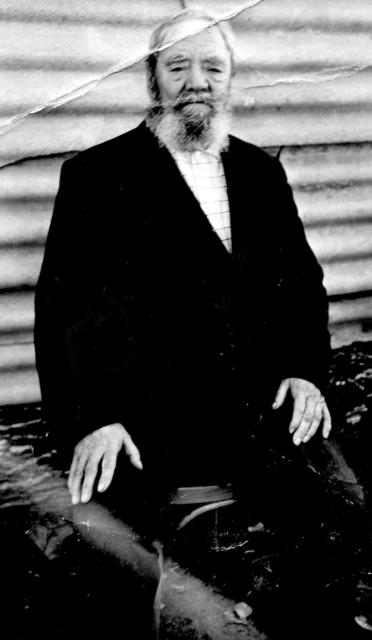
Ivan Slavik
- Early Life and Military Service
- Conversion and Religious Suppression
- Religious Persecution and Imprisonment
- Post-Imprisonment Ministry and Legacy
- Legacy and Death
Early Life and Military Service
Johann Josef Kovacswas born in 1883 in the town of Nepomuk, Bohemia, part of the Austro-Hungarian Empire. In 1914, the outbreak of World War I saw Kovacs drafted into the Austro-Hungarian Army.
After being taken prisoner, Kovacs joined the Czechoslovak Corps within the Russian Imperial Army. With the outbreak of the October Revolution in 1917, he aligned himself with the Red Army and later served in the Cheka, the Soviet secret police.
Conversion and Religious Suppression
During his time in the Cheka, Kovacs changed his name to Ivan Iosifovich Slavik. In 1926, his wife, Alexandra Semenovna, began attending a Pentecostal church in Odessa. Slavik, a devout communist and atheist, vehemently opposed her religious activities and threatened to harm the church's pastor, Ivan Voronaev.
Despite his threats, Alexandra remained steadfast in her faith. Desperate, Slavik planned to murder Voronaev. However, a dramatic event unfolded during a church service when Slavik witnessed angels and heard a message from the Holy Spirit, delivered in his native Czech language. This encounter led to his conversion and a profound change of heart.
Religious Persecution and Imprisonment
The Stalinist repressions of the 1920s and 1930s targeted religious groups, including evangelical Protestants. Churches were closed, pastors arrested, and religious literature banned. During this time, Slavik rose to prominence as the leader of the Odessa church.
In 1933, Slavik was arrested and subjected to torture. However, his unwavering faith sustained him through his ordeal. He was sentenced to eight years in a labor camp, but his sentence was later reduced to six years. He served his time in Kazakhstan and was released in 1940.
Post-Imprisonment Ministry and Legacy
After his release, Slavik continued his ministry in the city of Djambul (now Taraz) in Kazakhstan. In 1956, he was ordained as the bishop of the United Council of Evangelical Christian Churches of the Seventh-day Adventists (OCEKhVE) in Central Asia and Kazakhstan.
Despite continued persecution, Slavik ordained numerous young ministers who would carry on the legacy of the Pentecostal faith. In his twilight years, he devoted his remaining strength to praying for the sick and interceding on behalf of the faithful.
Legacy and Death
Ivan Iosifovich Slavik passed away on April 5, 1972, surrounded by fellow believers who had come to pay their respects. He was laid to rest in the Christian cemetery in Djambul, leaving behind a legacy of faith, resilience, and selfless service.