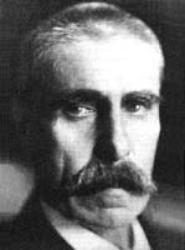
Jacques Lacan
 France
Biography of Jacques Lacan
Jacques Lacan was a French psychiatrist and psychoanalyst. He studied medicine and defended his dissertation on paranoid disorders in 1932. In the post-war years, he taught psychoanalysis and led the Paris Psychoanalytic Society. After the dissolution of this organization in 1953, he joined the newly formed French Psychoanalytic Society, and with its split and his own exclusion from the International Psychoanalytic Association, he founded the Freudian School in 1964 (he dissolved it in 1980). From 1953 to 1980, Lacan held famous seminars that had a significant influence on the development of psychoanalysis. Lacan died in Paris on September 9, 1981.

Theoretical Contributions
Lacan's published works form two groups - a collection of works from the 1930s, published under the title "Texts" in 1966, and recordings of his seminars published since 1973 by his son-in-law and director of the Lacan Archive, J.-A. Miller (10 volumes have been released as of 1998). The publication of the texts from the first group established Lacan's reputation as one of the leading representatives of French structuralism. His seminars, which had an educational character, were popular among Parisian intellectuals.
Lacan's main contribution lies in the structuralist revision of Freudian psychoanalysis. He drew on the research of Claude Lévi-Strauss, who applied the principles of structural linguistics (Saussure, Trubetzkoy, Jakobson) to ethnology. Like Lévi-Strauss, who discovered analogies between language and the phenomenon of kinship, Lacan interpreted language as the structural condition for "psychoanalytic" phenomena; the unconscious itself is "structured like a language".
Another key phenomenon, desire, is defined by Lacan as the metonymy of ceaseless searching, with an imaginary primal loss as its starting and end point, which is in fact an inevitable "lack of being" for every human being.
Changes in Psychoanalysis
The changes in Lacan's theory corresponded to changes in psychoanalytic practice. The analyst-patient relationship of "transference" was dramatized and staged by Lacan based on the relationships between the characters in Plato's dialogue "Symposium" - Socrates, Agathon, and Alcibiades. The analyst himself had to question the desire that moved him. The customary requirement of psychoanalytic practice - the neutrality of the analyst, which should suppress any "counter-transference" - was considered by Lacan to be unattainable.
In his own psychoanalytic sessions, Lacan constantly experimented with their duration; for example, in order to create unpredictability for the patient, Lacan abruptly shortened the session. Such a violation of established rules became one of the reasons for Lacan's exclusion from the International Psychoanalytic Association.
Influence and Legacy
Lacan was the first major psychoanalyst to attempt to overcome Freudian empiricism. The range of ideas that Lacan drew upon for the theoretical revision of psychoanalysis was very broad, from Plato to Descartes, from Kant to Heidegger. Lacan engaged in dialogue with contemporaries such as Jean-Paul Sartre and Maurice Merleau-Ponty, with whom he had friendly relations, as well as with Claude Lévi-Strauss. Lacan's philosophical ideas, although eclectic, attracted great interest from philosophers, literary scholars, and cultural theorists, such as Pierre Legendre and Slavoj Žižek. Inspired by Lacan, a method of reading literary texts ("the constellation of desires") gained recognition alongside Jacques Derrida's "deconstruction" and Michel Foucault's "discourse". Lacan's version of psychoanalysis aimed to be at the forefront of scientific thought of his time, incorporating elements of structural linguistics, game theory, and cybernetics. In his later years, Lacan persistently sought to formalize his theory and engaged in the study of topology.