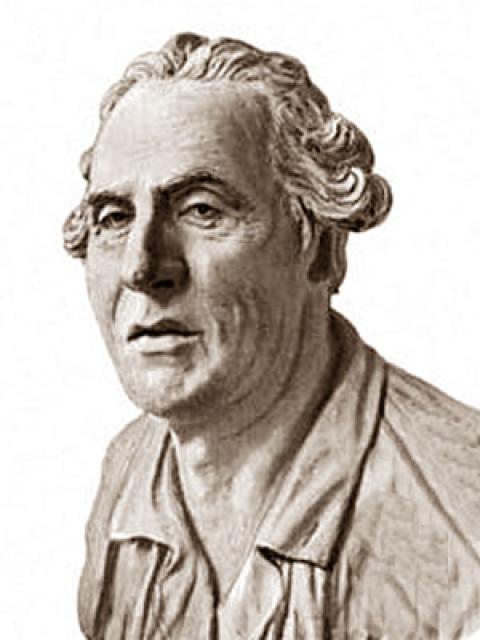
Jahn Pigal
 France
- Jean-Baptiste Pigalle: The Master of French Sculpture
- Influential Journey to Rome
- Académie Royale and Masterpieces
- Patronage and Allegory
- Education and Legacy
- Famous Sculptures and Nadars
- Legacy and Influence
Jean-Baptiste Pigalle: The Master of French Sculpture
Early Life and TrainingJean-Baptiste Pigalle, a renowned French sculptor, was born into a humble family in Paris in 1714. From a young age, he exhibited extraordinary artistic talent, which led him to pursue an apprenticeship under Robert Le Lorrain and Jean-Baptiste Lemoyne.
Influential Journey to Rome
In 1736, Pigalle embarked on a formative journey to Rome, where he immersed himself in the grandeur of ancient and contemporary Italian art. This experience significantly shaped his artistic style, blending classical influences with naturalistic tendencies.
Académie Royale and Masterpieces
After returning to Paris, Pigalle's reputation soared. In 1744, his striking "Mercury Attaching His Winged Sandals" (Louvre Museum) earned him membership in the prestigious Académie Royale de Peinture et de Sculpture. This masterpiece exemplifies Pigalle's ability to harmoniously fuse classical forms with delicate naturalism.
Patronage and Allegory
Throughout his career, Pigalle enjoyed the patronage of influential figures, including Madame de Pompadour. His works for her included portrait busts and allegorical sculptures such as "Love and Friendship" (Louvre Museum), a testament to Pigalle's skill in capturing both human emotions and abstract concepts.
Education and Legacy
From 1752, Pigalle assumed a teaching role at the Académie Royale, where he shared his knowledge and techniques with aspiring artists. In 1785, he was elected President of the Académie, a testament to his esteemed position in the French art world.
Famous Sculptures and Nadars
Pigalle's oeuvre encompasses a wide range of works, from religious sculptures, such as "Virgin and Child" (Église Saint-Eustache) and "Saint Sulpice" (Église Saint-Sulpice), to enchanting child figures, such as "Boy with a Cage" (Louvre Museum). He also excelled in creating nadars, commemorative tombs, with the "Tomb of Maurice de Saxe" (Cathédrale Saint-Thomas) standing as a masterpiece in this genre.
Legacy and Influence
Jean-Baptiste Pigalle's contributions to French sculpture are immense. His mastery of form, depth of expression, and fusion of styles cemented his legacy as one of the greatest sculptors of the 18th century. His works continue to inspire and captivate audiences to this day.




