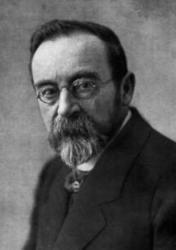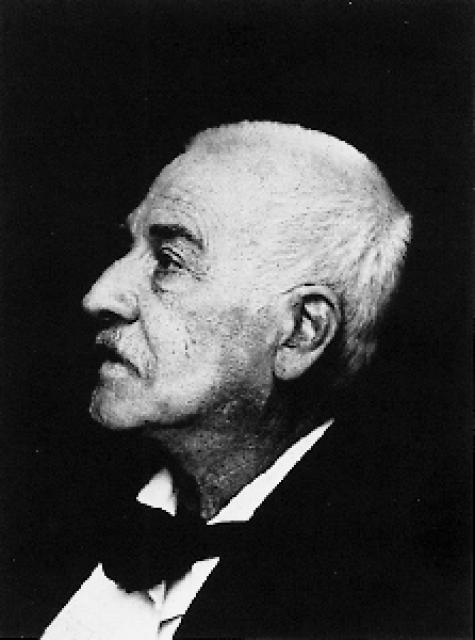
Jakob Burckhardt
 Switzerland
- Jacob Burckhardt: Pioneer of Cultural History
- Academic Career
- Interpretation of the Italian Renaissance
- The "Cultural History" Approach
- Key Works
- "Cicero" (1855): A guide to Italian painting.
- Influence and Legacy
Jacob Burckhardt: Pioneer of Cultural History
Early Life and EducationJacob Burckhardt was born on May 25, 1818, in Basel, Switzerland. He pursued his studies in Berlin and Bonn, where he delved into theology, history, and art. He was significantly influenced by German historians Leopold Ranke, Gottfried Kinkel, and Franz Kugler.
Academic Career
Burckhardt returned to Basel and held teaching positions at the university and a secondary school. He retired in 1893 and passed away in Basel on August 8, 1897.
Interpretation of the Italian Renaissance
Burckhardt gained recognition for his innovative interpretation of the Italian Renaissance. He viewed it as the first manifestation of the modern spirit. Unlike his contemporaries who focused on political and economic events, Burckhardt emphasized the psychological and aesthetic aspects of history.
The "Cultural History" Approach
Burckhardt's approach to history sought to capture the essence of past eras. He created "cultural types" that embodied the dominant characteristics of a period, such as the "universal man" of the Renaissance.
Key Works
Burckhardt's most influential works include:"The Age of Constantine the Great" (1853): Examined the decline of paganism and the rise of Christianity.
"The Civilization of the Renaissance in Italy" (1860): Proposed that Italian Renaissance culture heralded the emergence of individualism.
"Cicero" (1855): A guide to Italian painting.
"The History of the Renaissance in Italy" (1867): Focused on architecture and the arts.
Influence and Legacy
Burckhardt's emphasis on cultural and aesthetic factors in history revolutionized the discipline. His theories about the Renaissance remain influential today. Upon his death, several posthumous works were published, including "Greek Cultural History" (1898-1902), which explored the limitations imposed by the ancient Greek city-states.