James Lowell
 USA
USA- Biography of James Lowell
- Early Career and Literary Works
- Later Career and Contributions
- Later Life and Legacy
Biography of James Lowell
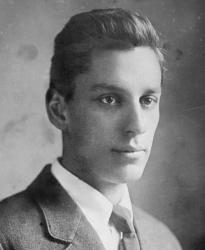
James Lowell was an American poet, critic, and editor. He was born on February 22, 1819, in Cambridge, Massachusetts. After graduating from Harvard University in 1838, he chose literature as his profession.
Early Career and Literary Works
During the years 1844 to 1848, Lowell published two books of poetry and collaborated with several publications. This period marked the publication of his witty and observant work "Fable for the Critics," the romantic poem "Vision of Sir Launfal," the political satire "The Biglow Papers," and his second collection of poems.
The plot of his poem "Vision of Sir Launfal," predominantly written in tetrameter, is based on Thomas Malory's narration of the search for the Holy Grail and partly reflects the influence of Alfred Tennyson's "Idylls of the King." In the poem, the protagonist encounters a beggar in a dream on the eve of his quest for the Holy Grail and scornfully tosses him a small coin. Years later, he sees himself returning home, old and feeble, after his futile search. Once again, the beggar appears before him, and this time, the protagonist shares a crust of bread with him. The protagonist realizes that the Grail, which he failed to find in distant lands, is the cup of mercy, and by sharing it with the beggar, he feels a renewal of life-giving strength.
Later Career and Contributions
In 1855, Lowell assumed the position of the recently vacated chair of modern languages at Harvard University, previously held by George Washington Longfellow. He served as the editor of literary journals such as Atlantic Monthly (from 1857) and North American Review (from 1863), making significant contributions to the establishment of realism in American literature. Over the years, his own poetry gradually shifted focus from reformist zeal to a deepening spiritual aspect and an increased interest in national issues. This is evident in his second volume of "The Biglow Papers" (1867), the "Ode Recited at Harvard Commemoration" (1865), and "The Cathedral" (1869).
In the first volume of "The Biglow Papers," written in the dialect of a farmer and accompanied by weighty pseudo-scholarly prefaces by Pastor Wilbur, Lowell condemns the Mexican-American war as a "national crime, all for the sake of the greed of slaveholders." The army, the idea of America's special destiny, the lofty speeches of senators, the corruption of political leaders, and the intrigues of those aspiring to the White House all become targets of his criticism. In the second volume, he employs the same techniques to express his opinions on the Civil War and the associated issues.
After 1856, Lowell increasingly turned away from poetry and focused his attention on writing essays on literature, history, and politics. His essays dedicated to Dante, Shakespeare, Milton, Dryden, Wordsworth, and other writers had a partly artistic character, combining literature and criticism.
Later Life and Legacy
During his tenure as a diplomat in Spain (1877-1880) and England (1880-1883), as well as through observing America's domestic politics during the Reconstruction period, Lowell contemplated the concept of civic responsibility. As an intellectual, he held the belief in the interconnectedness of humanity's fate, and in his political stance, he advocated for enlightened democracy and emphasized the necessity of personal self-improvement. James Lowell passed away on August 12, 1891, at his own estate in Elmwood, Cambridge.