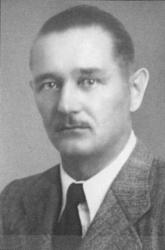
James Stanislaus Bell
 Great Britain
- Dundee beginnings and a Black Sea mission
- Years among the Circassians
- A journal and a political legacy
James Stanislaus Bell left the British Isles as a merchant and became one of the best-known foreign witnesses to Circassia’s struggle against Russian expansion. He spent several years among Circassian communities on the eastern Black Sea coast, advising local leaders and recording what he saw. His published journal remains a vivid source on the region, though it is also an openly political account written by a man who had taken the Circassian side.
Dundee beginnings and a Black Sea mission
Bell was born in Dundee, Scotland. Biographical sources disagree on the exact date: some give January 8 or 9, 1797, while others place his birth in January 1796. He came from a Scottish merchant family, and his career developed through commercial activity rather than a conventional military commission. Later descriptions sometimes call him a British intelligence officer, but the surviving record more clearly shows a merchant and political emissary whose work took on strategic importance during a conflict between Britain and Russia.
In the 1830s, the Circassians were resisting Russian efforts to expand control over the Caucasus and the Black Sea coast. British interest in the region mixed advocacy for Circassian independence with commercial and strategic concerns. Bell became connected to this cause through the circle around the British diplomat and political writer David Urquhart, which promoted trade with Circassia and challenged Russia’s claim to control the coast.
Bell was associated with the 1836 voyage of the British schooner Vixen, a trading mission to the Circassian shore. Russian forces seized the vessel, claiming that it had violated restrictions on trade with the coast. The seizure triggered debate in Britain over Russia’s authority in the region and the government’s response. The incident gave the Circassian question a brief diplomatic spotlight and helped draw attention to Bell’s activities.
Years among the Circassians
Bell spent extended periods in Circassia from 1837 through 1839. He was not simply an observer. In his own account, he describes taking part in discussions with local leaders and advising them on forms of warfare suited to their forces. He also recorded communities, customs, trade, and the effects of the conflict. His presence brought information between Circassian leaders and British contacts, giving his work both a political and an intelligence-gathering dimension.
His relationships in the region were personal as well as political. He learned from local people and wrote admiringly about their society, while viewing the Russian campaign as an imperial war that destroyed homes and livelihoods. His account reflects this stance throughout. The vivid detail makes it valuable, but the book should also be read as the testimony of an advocate, not as a neutral survey.
The Russo-Circassian conflict was long and uneven. Circassian communities fought under different leaders and local authorities, while the Russian Empire could draw on much greater military resources. Bell’s advice, observations, and advocacy could not decide the outcome, but they helped bring Circassia into British public discussion at a time when few readers in Britain knew much about the region.
A journal and a political legacy
In 1840, Bell published the two-volume *Journal of a Residence in Circassia, During the Years 1837, 1838, and 1839*. The book combined travel writing, political argument, and a record of the war. Bell argued strongly against Russian expansion and explained why he had supported Circassian resistance. He also gave English-speaking readers accounts of local practices and the physical landscape of the Caucasus.
The journal became his lasting contribution. It preserved observations about a society undergoing invasion and upheaval, and later historians have used it to study both Circassian life and British attitudes toward the Russian Empire. Its value comes partly from Bell’s unusual access, but also from recognizing his perspective: he wanted readers to sympathize with Circassian independence and to challenge Russian dominion.
Bell died in 1858. Although his career did not follow the path of a formal diplomat or soldier, his commercial ventures, political connections, and years in Circassia placed him at the intersection of trade, international rivalry, and local resistance. His name endures because he witnessed the conflict at close range and left behind an account that made Circassia visible to readers far beyond the Black Sea.