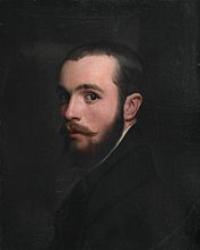
Jan Chardin
 France
- Early Life and Education
- Early Works
- Genre Paintings
- Portraits and Childhood Depictions
- Masterful Still Lifes
- Artistic Legacy
Early Life and Education
Jean-Baptiste Siméon Chardin, renowned French painter of the 18th century, was born in Paris on November 2, 1699, to a carpenter. His artistic journey began under the tutelage of the academic painter Pierre-Jacques Cazes and later at the École de l'Académie Royale de Peinture et de Sculpture. He also collaborated with Nicolas-Noël Coypel and Jean-Baptiste Vanloo.
Early Works
Chardin's early works exhibited decorative grandeur and superficial charm. However, his deep study of nature led to a transformation in his creative approach, resulting in the classical clarity and simplicity that became his signature style.
Genre Paintings
Chardin's genre paintings are imbued with a profound lyricism and an affection for ordinary people. They authentically capture the appearance and inner worlds of common citizens, as seen in masterpieces such as "La Porteuse d'Eau" (1739) and "La Blanchisseuse" and "La Prière avant le repas" (both 1744).
Portraits and Childhood Depictions
Chardin's portraits, including his self-portraits (1771 and 1775) and the portrait of his wife (1775), exhibit lifelikeness, simplicity, and emotional depth. His depictions of children, such as "Le Garçon au toton" (1738), likewise convey the vitality, innocence, and charm of their subjects.
Masterful Still Lifes
Chardin's still lifes achieve a rigorous internal order and rhythm. He meticulously selected humble objects from everyday life, imbuing them with a warmth that evokes the human presence. Works like "Le Plat d'étain" and "La Nature morte aux brioches" both housed in the Louvre, Paris, exemplify his ability to elevate the mundane to the poignant.
Artistic Legacy
Chardin's painting is characterized by a cohesive silver-gray tonality, a wealth of subtle reflections and gradations that smooth the transitions between light and shadow, and a virtuoso play on values. His oeuvre epitomizes the flourishing of realism in the 18th century. He passed away in Paris on December 6, 1779, leaving an enduring legacy that continues to inspire generations of artists and art enthusiasts alike.