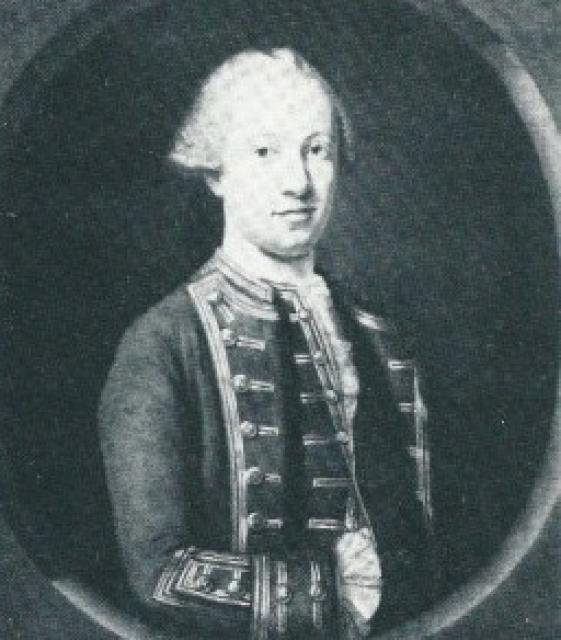
Jan Hope
 Netherlands
Biography of Jan Hope
Jan Hope was a European banker, industrialist, and entrepreneur. While his cousin Henry Hope was well-known for his success in banking, Jan was more attracted to the glamorous world of high society. Despite this, Jan managed to achieve fame in his own right.
Jan was the only child of the prominent Hope family, who were well-respected bankers and entrepreneurs. His father, Thomas Hope, was a successful businessman and banker who even provided advice to the Dutch stadtholder William V. Jan's mother, Margaretha Marcelis, came from an influential family of merchants.
Jan was baptized as Jan in the Mennonite church, but later changed his name to John when he was 26 years old in order to better integrate into Amsterdam's high society. Unlike his cousin and business partner Henry, Jan aspired to be part of the Dutch elite, who were actively advocating for Scottish Enlightenment. However, to achieve this, Jan needed a title and the "right" religion.
Over time, John managed to become a member of the Dutch Scientific Society and the Dutch Literary Society. In order to obtain these memberships, he had to marry Philippina Barbara van der Hoeven, the daughter of the mayor of Rotterdam, and purchase Nederhorst den Berg Castle for the title. John and Philippina had three children named Thomas, Adrian, and Henry.
John Hope is often associated with the "fire engine," which he first encountered at Leiden University. He later collaborated with James Watt and Matthew Boulton and acquired his own machine, which essentially functioned as a steam engine. This machine was installed on an elevated platform at his summer house and helped supply water to his gardens. This was quite unusual at the time, as most Dutch people struggled with excess water rather than a lack of it in designated areas. Previously, Hope used a windmill to supply water to his parks, but it was rendered useless on windless days.
In 1781, the "fire engine" was installed and remained in operation until at least 1842. By that time, such engines had become obsolete and were no match for the more efficient steam boilers. Despite this, banking remained John's primary occupation, although he was not particularly enthusiastic about it. He was much more passionate about his country estates, prestigious titles, and the opportunity to present himself to high society.
According to rumors, Henry, his cousin, understood and even appreciated John's weakness. Moreover, he managed to find a suitable application for John's talents – his art collection made a great impression on potential business partners.
John Hope passed away in 1784. His sons were initially cared for by their mother, but after her death, Henry took on the responsibility. In 1794, Henry was forced to flee the country, taking not only his nephews but also a part of the family collection with him. Among all of Jan-John Hope's children, only Adrian Elias returned to the Netherlands. He dedicated his life to improving and expanding the gardens of Groenendaal and Bosbeek until his last days.