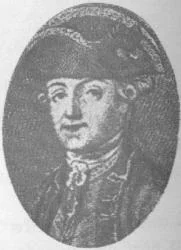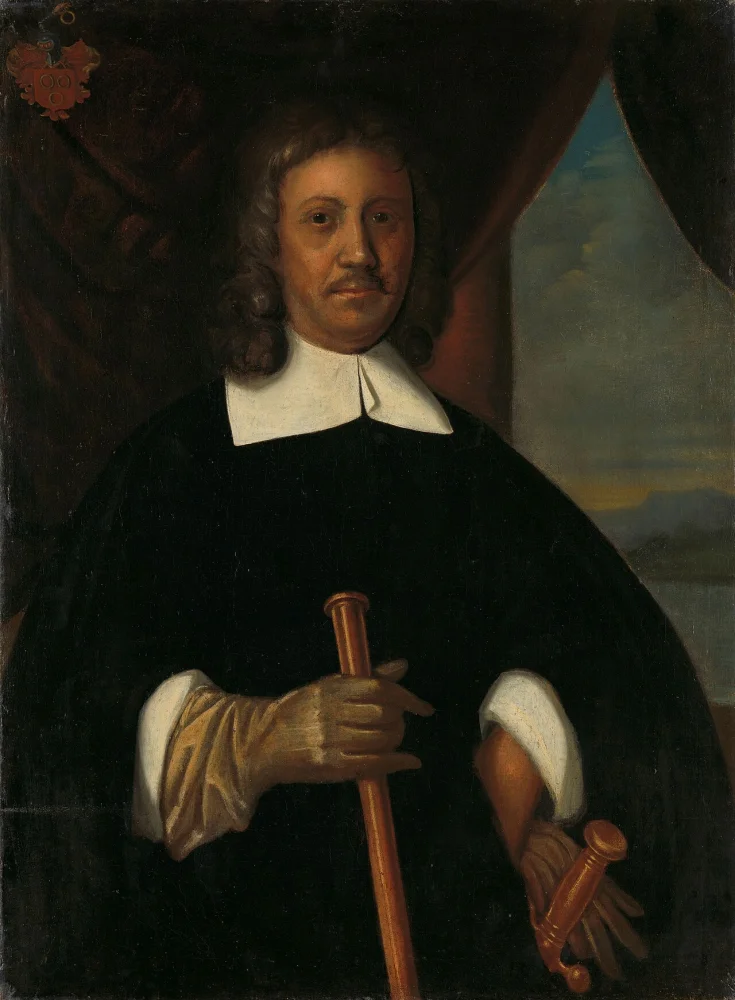
Jan van Riebeeck
Jan van Riebeeck was a Dutch East India Company official whose assignment to Table Bay in 1652 began a permanent Dutch foothold at the Cape of Good Hope. The outpost was meant to provision ships sailing between Europe and Asia. It became the starting point of a colonial settlement whose expansion dispossessed Indigenous communities and shaped the history of southern Africa.
A company servant bound for the Cape
Born in Culemborg in the Dutch Republic on 21 April 1619, Van Riebeeck joined the Dutch East India Company, known by its Dutch initials as the VOC, in 1639. He served in several posts across Asia, including at Batavia, the company’s main base in the East Indies. In 1651, the VOC assigned him to lead a new refreshment station at the Cape, where ships could take on fresh water, vegetables, and other supplies.
Van Riebeeck arrived at Table Bay on 6 April 1652 with a small expedition. His instructions were practical: build a fort, grow food, and arrange trade for meat with local Khoikhoi pastoralists. He kept a detailed daily register, now an important source for the early years of the settlement.
A settlement and its consequences
The station soon grew beyond a temporary stop. The VOC released some employees to become independent farmers, or “free burghers,” whose land and livestock needs increasingly clashed with Khoikhoi access to grazing and water. Van Riebeeck oversaw the construction of boundaries to keep cattle away from company farms, while the colonial settlement steadily claimed more land.
Relations with Khoikhoi communities deteriorated as trade disputes and pressure on land intensified. Conflict broke out in 1659, in the first Khoikhoi-Dutch war. The settlement also relied on enslaved labor: enslaved people were brought from places including Madagascar and the VOC’s Asian territories to work at the Cape. The post’s growth brought enduring consequences for Indigenous people and for those forced into slavery.
Van Riebeeck’s own records show both the company’s ambitions and the objections of local leaders to the loss of their land. The Cape was not an empty place awaiting settlement; it was already home to communities with established economies and patterns of movement.
Beyond the Cape
Van Riebeeck commanded the station until 1662, when he was transferred to Asia. He later served as secretary to the governor-general of the Dutch East Indies, based in Batavia. He died there on 18 January 1677.
He is often remembered as the founder of Cape Town, but his more precise historical role was as the VOC commander who established its Cape provisioning station. That outpost became a settlement and, over time, a colonial society whose expansion came at profound cost to the people already living in the region.