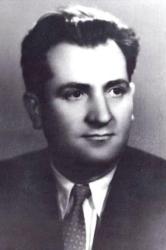
Jean-Baptiste Carpentier
 France
Jean-Baptiste Le Carpentier moved from a local legal career in Normandy into the most turbulent ranks of the French Revolution. Elected to the National Convention in 1792, he became a forceful Montagnard deputy and a representative sent on missions in western France. His record combined republican conviction and military leadership with a reputation for harsh repression that followed him long after the Convention had fallen.
From Valognes to the Convention
Le Carpentier was born on June 1, 1759, in Helleville, in Normandy. Before the Revolution, he worked as a bailiff in Valognes. He joined the local patriotic movement as France’s political order began to change, serving in the National Guard and becoming a leader in the district’s militia. In September 1792, voters in the Manche elected him to the National Convention, where he sat with the Montagnards, the more radical faction of the new republic.
During the trial of Louis XVI, Le Carpentier voted for the king’s death. He later took part in the struggle against the Girondins, political rivals of the Montagnards, and was dispatched to western departments as a representative of the Convention. These envoys carried broad powers to raise troops, oversee local administrations and defend the Republic as it faced foreign invasion and internal revolt.
Mission in a region at war
Le Carpentier’s first mission took him to the Manche and neighboring Orne in 1793 to help enforce a mass conscription. Later that year, he was sent to the Manche, Ille-et-Vilaine and the Côtes-du-Nord during the rising against the Republic and the Vendée campaign. He organized local authorities, oversaw recruitment and helped direct the defense of Granville against the Vendée army, which retreated from the town.
His methods were severe. Le Carpentier ordered arrests of priests and charitable sisters, suspended local administrations, and established a military commission at Avranches that rapidly sentenced prisoners to death. Accounts of his conduct in Saint-Malo and other towns made him a deeply controversial figure. He presented his actions as necessary to defend the Republic, while opponents denounced him for the violence of his rule.
A life shaped by political reversals
After the fall of Robespierre in 1794, Le Carpentier continued to defend his Jacobin record. Accusations from local residents reached the Convention, and he was implicated in the Prairial uprising of 1795. Arrested, he benefited from a general amnesty the following year and returned to private life in Valognes, working as a business agent during the Empire.
The Bourbon Restoration brought a final reversal. A law in 1816 sent former regicides into exile; after Le Carpentier attempted to return to France, he was arrested and sentenced to deportation. He spent his final years confined at Mont-Saint-Michel, where he died on January 27, 1829. His life captures the Revolution’s volatile reach: a local official transformed into a powerful envoy, then condemned to decades of political exile and imprisonment.