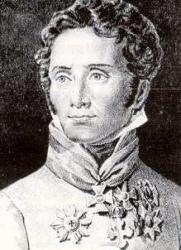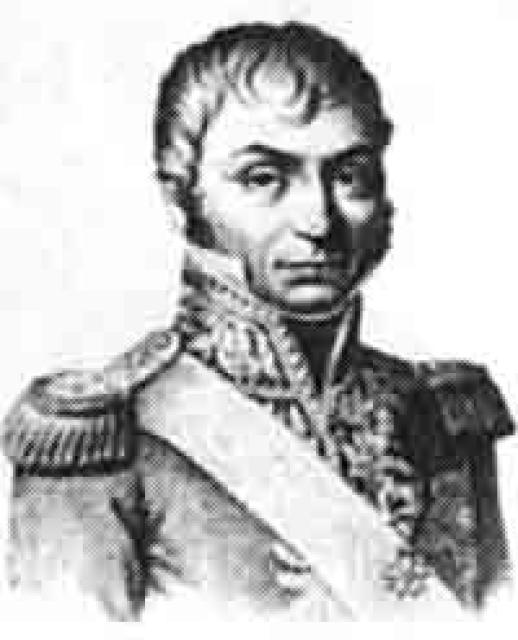
Jean-Batist Jourdan
 France
- Biography of Jean-Baptiste Jourdan
- Early Life and Military Career
- Revolutionary Activities and Military Achievements
- Later Military and Political Career
Biography of Jean-Baptiste Jourdan
Jean-Baptiste Jourdan (1762-1833) was a French marshal. He began his military service as a soldier in the American War of Independence and later participated in the Revolutionary War in 1793, where he was promoted to the rank of divisional general. He distinguished himself in the Battle of Fleurus in 1794. Jourdan also served as a member of the Council of Five Hundred and became a marshal of France under Napoleon. He was later appointed as a count and peer by Louis XVIII. After the revolution of 1830, Jourdan briefly held the position of Minister of Foreign Affairs before declining it in August of the same year to become the director of the Invalides.
Early Life and Military Career
Jean-Baptiste Jourdan was the son of a barber and was orphaned at an early age. He initially prepared for a career in the clergy but in April 1778, he joined a colonial depot as a soldier. In December of the same year, he was transferred to the Okcerua infantry regiment and was sent to the American colonies. From 1779 to 1782, Jourdan participated in the American War of Independence. After his military service, he bought his own shop following his marriage.
Revolutionary Activities and Military Achievements
During the revolutionary events in July 1789, Jourdan emerged as a prominent figure and was elected as the captain of the national guard. In October 1791, he became the lieutenant colonel of the 2nd battalion of volunteers in the Upper Vienne department. From 1792 to 1793, Jourdan fought in the North, taking part in battles such as Jemappes and Neerwinden. On May 27, 1793, he was promoted to the rank of brigadier general and on July 30, he became a divisional general. Leading the Northern army, Jourdan achieved notable victories at Hondscote in September 1793 and Wattignies in October 1793. On July 2, 1794, he was appointed as the commander of the Sambre-Meuse army. He gained fame for his victory in the Battle of Fleurus in 1794, which, according to Napoleon's statement, "saved France." However, during the 1796 campaign, Jourdan's actions were unsuccessful, and he was recalled to Paris on September 29, 1796. According to a characterization by Director Larévillière, Jourdan was considered mediocre and unable to organize his actions. He was described as lacking confidence, indecisive, and losing his head at the first sign of failure.
Later Military and Political Career
On April 12, 1797, Jourdan became a member of the Council of Five Hundred. From October 14, 1798, he served as the commander of the Mainz Army (later the Danube Army from March 7, 1799). On March 25, 1799, his forces were defeated by Archduke Charles at Stockach, leading to Jourdan leaving the army due to "health reasons." He then became the inspector general of infantry and cavalry on January 21, 1800. On July 24, 1800, Jourdan was appointed as an ambassador to the Cisalpine Republic. Later, on December 1, 1802, he became a member of the State Council. Jourdan was known for his left-leaning views and frequently expressed his distrust of Napoleon, which became one of the reasons why he was the only marshal under Napoleon who did not receive any titles from him. On January 26, 1804, Jourdan was appointed as the commander of the Italian Army but was replaced by André Masséna before the start of the major 1805 campaign. From March 17, 1806, he served as the governor of Naples under King Joseph. On July 17, 1808, Jourdan, together with Joseph, was sent to Spain where he became the chief of staff of the Spanish Army. Although Joseph nominally commanded the army, Jourdan had effective control over the operations. However, the marshals in the country (commanders of the corps) often ignored the recommendations of both Joseph and Jourdan. Jourdan conducted a successful operation at Almonacid, where General Sebastiani's troops defeated the Spanish army. In 1809, at his personal request, he was allowed to return to France, but in 1811, Jourdan was forced to return to Spain. In July 1812, he failed to reach an agreement on joint operations with Marshal Marmont and was defeated at the Battle of Arapiles. In June 1813, after the start of Wellington's large-scale offensive, Joseph handed over command of the army to Jourdan. The French army was defeated in the Battle of Vitoria, with Jourdan's forces losing 7,500 men and Wellington capturing 150 cannons, the army's treasury, and numerous trophies, including Jourdan's marshal's baton. Following this defeat, Jourdan returned to France. Only when the empire was nearing collapse, on January 30, 1814, Jourdan was appointed as the commander of the 14th and 15th military districts in Rouen. During the "Hundred Days," he received the title of peer of France from Napoleon and two days later, he was appointed as the governor of the 6th military district. In 1815, Jourdan eagerly accepted the offer to preside over the court-martial of Marshal Michel Ney (the court declared itself incompetent and passed Ney's case to the House of Peers). Despite the Second Restoration, Jourdan retained the favor of the Bourbons and received the title of count in 1816. From January 10, 1816, he served as the governor of the 7th military district in Grenoble. On March 6, 1819, he once again received the title of peer of France. After the July Revolution of 1830, Jourdan briefly held the position of Minister of Foreign Affairs but only occupied it for 9 days. On August 11, 1830, he assumed one of the most honorable positions in the army as the governor of the Invalides. Jean-Baptiste Jourdan was buried in the cathedral of the Invalides.