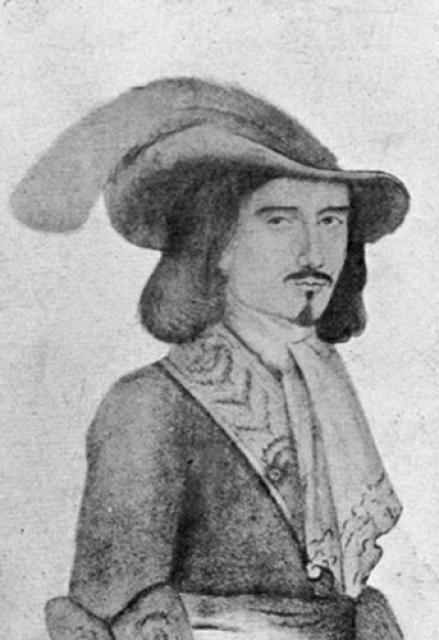
Jean Cavalier
 Great Britain
- Childhood and Early Years
- Rise as a Leader of the Camisards
- Duke of the Cévennes
- Negotiations and Surrender
- Service under Louis XIV
- Emigration and Later Life
- Legacy
Childhood and Early Years
Jean Cavalier was born in 1681 in Ribaute-les-Tavernes, France, to Antoine Cavalier, a Huguenot peasant, and Élisabeth Granier, a pastor's daughter. Despite the Edict of Nantes, which granted religious tolerance to Protestants, Cavalier's family faced persecution. In the 1660s, their home was subject to "dragonnades," where soldiers harassed and intimidated Huguenots into converting to Catholicism.
Rise as a Leader of the Camisards
In 1702, the revocation of the Edict of Nantes sparked the Camisard rebellion in the Cévennes region of France. Cavalier, then 21 years old, joined the uprising, rising rapidly through the ranks due to his military prowess and ability to maintain discipline among the guerrilla fighters.
Duke of the Cévennes
In 1704, the Camisard army proclaimed Cavalier as "Duc des Cévennes" (Duke of the Cévennes). Under his leadership, the Camisards achieved significant victories against the royal army. Cavalier's military tactics earned him the admiration of his followers and the respect of his adversaries.
Negotiations and Surrender
After three years of fighting, Cavalier entered into negotiations with Marshal Claude Villars. Recognizing the impossibility of receiving external aid from European allies, Cavalier agreed to surrender on condition of religious tolerance for the Protestants. Despite his efforts, only a small number of his followers joined him in surrendering to the royal army.
Service under Louis XIV
Cavalier was granted the rank of colonel and allowed to form a regiment of former Camisards. However, pressure to convert to Catholicism and the realization that the promises of religious freedom were not being fulfilled led him to regret his capitulation.
Emigration and Later Life
Cavalier fled France in 1705, seeking refuge in Montbéliard, Lausanne, England, and Ireland. In England, he distinguished himself in the War of the Spanish Succession and wrote his memoirs, "Memoirs of the Wars of the Cévennes." In 1738, Cavalier was appointed Lieutenant-Governor of Jersey, a position he held until his death in 1740.
Legacy
Jean Cavalier became a symbol of Huguenot resistance and the fight for religious freedom. His military exploits and unwavering faith continue to inspire and resonate with those who value the preservation of liberty and human dignity.




